
Renovate or rebuild?
Former UH-Maui dorms are assessed for a future life as low-income housing
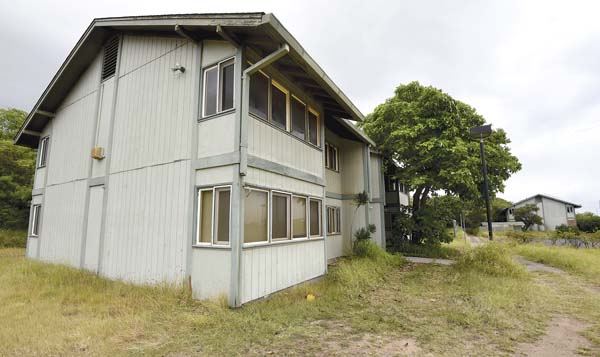
These photos of the University of Hawaii Maui College student housing buildings were taken Saturday. Located on the corner of Wahinepio and Kaahumanu avenues in Kahului, the dorms were built in 1981 and have been vacant for at least 20 years. -- The Maui News / MATTHEW THAYER photo
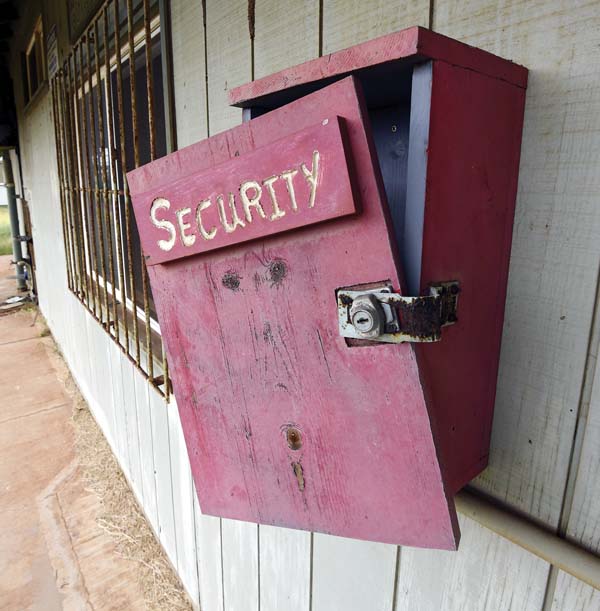
Carol Reimann, director of the Department of Housing and Human Concerns, said that the inspection revealed leaks, mold, poorly repaired fixtures and visible cracks in the foundation. “It would take an army of licensed contractors . . . to address all of these significant recommendations,” Reimann said. -- The Maui News / MATTHEW THAYER photo
These photos of the University of Hawaii Maui College student housing buildings were taken Saturday. Located on the corner of Wahinepio and Kaahumanu avenues in Kahului, the dorms were built in 1981 and have been vacant for at least 20 years. -- The Maui News / MATTHEW THAYER photo
Carol Reimann, director of the Department of Housing and Human Concerns, said that the inspection revealed leaks, mold, poorly repaired fixtures and visible cracks in the foundation. “It would take an army of licensed contractors . . . to address all of these significant recommendations,” Reimann said. -- The Maui News / MATTHEW THAYER photo
Trending
Maui County has been hoping to convert a set of old college dorms into low-income housing -- but a recent inspection shows the buildings have a long way to go before they can be turned into livable spaces, or the best option might be to tear them down and rebuild.
Carol Reimann, director of the Department of Housing and Human Concerns, said that the inspection revealed leaks, mold, poorly repaired fixtures and visible cracks in the foundation.
"It would take an army of licensed contractors . . . to address all of these significant recommendations," Reimann told the County Council's Housing, Human Services and Transportation Committee last week.
Located on the corner of Wahinepio and Kaahumanu avenues in Kahului, the dorms were built in 1981 and have been vacant for at least 20 years, Reimann said. The 8.8-acre property includes three residential buildings, each with four apartment units; a multipurpose building with laundry, mail and recreation rooms; and a parking lot with 17 stalls. Each apartment unit is about 800 square feet with two bedrooms and one bath.
Since Dec. 15, 1980, the University of Hawaii Maui College has been leasing four of the acres from the county free of charge. After the dorms were vacated, the college planned to open a hospitality training academy on the site but later decided to build it elsewhere on campus. With the lease set to expire in 2035, Chancellor Lui Hokoana said the college is willing to give up the lease earlier to allow the county to use the property for housing.
"I get calls from the community all the time (asking) why don't I turn it into housing?" Hokoana said Thursday. "It can only be used for education if we keep it."
Hokoana said the college is supportive of the county's plans and would be open to providing services to families, such as children's summer programs and job training.
In March 2016, the college did a hazardous materials study of two buildings and discovered asbestos in the flooring and roof shingles, Reimann told the committee. A county-funded inspection by Honolulu-based Professional Real Estate Inspectors on March 28 also found plenty of problems.
Outside, the parking surface has deteriorated, and vegetation has overgrown to the point that it's damaged exterior walls and fixtures. The walls of the buildings showed rot, moisture and termite damage, while the foundations of two of the buildings contained vertical cracks.
"When we spoke to the inspector the other day, he had told us that when you see vertical cracks, that could be something seriously wrong with the foundation," Reimann said.
The roofs had moisture intrusion, missing shingles and broken or missing rain gutters, while the rooftop solar panels are damaged and leaking. Inside, mold is growing "in every single attic," Reimann said. Windows and doors are damaged, with most windows inoperable.
The plumbing, electrical and fire suppression systems are not up to code. Some of the plumbing has undergone "nonstandard repairs" that include duct tape wrapped around pipes, Reimann said. Electrical connections to water heating devices have been removed.
Renovate or demolish?
Reimann laid out three different options for the buildings.
The first option, renovation, would cost about $300 per square foot and would require gutting and rebuilding the structures.
"We don't advise renovation, because once they start gutting, there are many unknowns," Reimann said. "If you renovate and you go through taking things out, who knows what you would find."
Instead, the department is recommending two other options: either demolish and scrape or demolish and rebuild.
If the buildings were demolished and scraped, the county could redo the interior floor plan but could not expand beyond the current foundations. However, if the buildings were demolished and rebuilt, the county would have the option to expand beyond the dorms' current footprint.
The inspection report also calls for several recommendations, including:
• Repairing the foundation.
• Evaluating and replacing termite-ridden beams and rafters.
• Treating all dry wall for moisture damage and mold intrusion.
• Bringing plumbing, electrical and fire suppression systems up to code.
• Overhauling the fire suppression, alarm and smoke detector systems.
• Replacing gutter systems, exterior and interior doors, interior window trim, flooring materials, plumbing fixtures and fire extinguishers.
The department reported having leftover funds from the $100,000 the council set aside last year to assess the structures. Reimann said the inspection cost $5,500. If the project also uses state or federal funds, it would require an environmental assessment.
And, because the property is zoned under "parks," it would also require a zoning change and community plan amendment, said Reimann, adding that "somehow zoning in the community plan got changed while it was a dormitory."
Council members wanted to see action soon. Council Member Riki Hokama said he's been talking about the project for two years, "and we still have nothing on site." He suggested using it as a temporary shelter in the meantime.
"My thing is, flatten it out, demolish it, get the infrastructure up to speed and start as soon as you can a temporary partial homeless rental program for those that are semi-homeless in vehicles already," he said. "We got the plumbing. We got the power there."
Council Member Alika Atay agreed with Hokama and wanted to see the property's use maximized. "It's 8 acres," he said. "If we follow our Kulamalu housing project up in Kula, on 4 acres they were able to put 56 two- and three-bedroom apartments in there. So if we double that, we'll have 100-plus families having affordable housing right there. So that's the long goal. The short goal is we got to get the university to make a decision."
However, whether it's the college or county's duty to demolish the buildings is still up in the air.
The terms of the lease say that "at the expiration or sooner termination of this lease," the college must turn over the property "in good order and condition."
"Either UH-Maui College has to repair and make good the buildings and fixtures, or they have to tear it down and remove all the debris," Reimann said.
However, college officials believe those terms don't apply if the county is the one to terminate the lease early, Hokoana said. And, since the college added water and sewer hookups, Hokoana said the college would be giving back the property in better condition than they received it. However, he was sure the two parties could come to an agreement.
"It has to be discussed, and we're grateful for the opportunity to use that land for free," Hokoana said.
Committee Chairwoman Stacy Crivello said that once the college and the mayor's administration work out an agreement, the issue will return to the committee.
Reimann said the low-income housing would likely be priced at 60 percent and below area median income levels, which is where "50 percent of our need for housing is," she said. The county would contract a nonprofit to manage the property.
* Colleen Uechi can be reached at cuechi@mauinews.com.