
The oven down under
Maui man is on a mission to share traditional Hawaiian cooking techniques of the imu
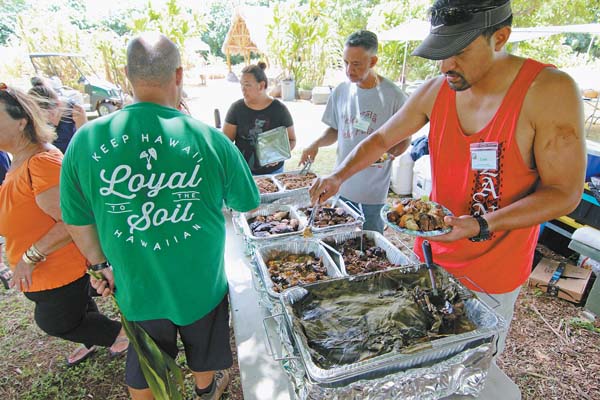
Makawao resident Joshua Faleulu (far right) and Joey Gonsalves, executive director of Hui No Ke Ola Pono, load up on the many dishes that were cooked in the imu during a workshop at the Maui Nui Botanical Gardens over the weekend. The Maui News / COLLEEN UECHI photo
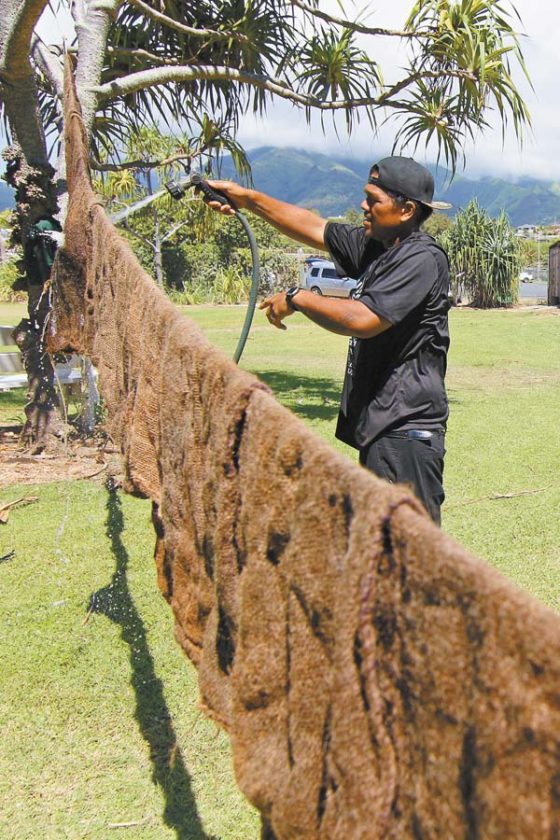
Waikapu resident Jonathan Kelly rinses off the burlap bags that were used to cover the imu during cooking. The Maui News / COLLEEN UECHI photo
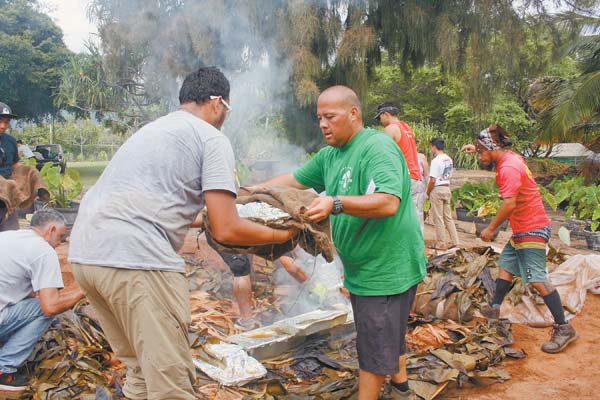
Ikaika Nakahashi (right) removes a pan of cooked food from the imu at the Maui Nui Botanical Gardens early Sunday morning. Nakahashi conducted a workshop on imu preparation and cooking at the gardens over the weekend. He said his goal is to promote Hawaiian traditions and the health benefits of cooking in an imu. TAMARA SHERRILL photo
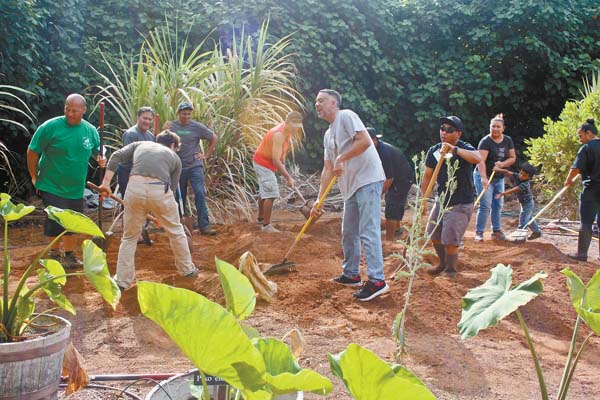
Participants work to uncover the imu after 12 hours of cooking. TAMARA SHERRILL photo
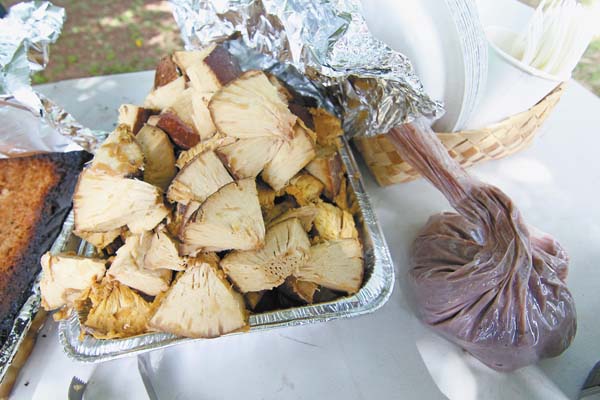
Ulu was one of the many vegetable and meat dishes prepared in the imu. The meal featured no white rice — only healthy starches like ulu, sweet potato and kalo. The Maui News / COLLEEN UECHI photo
Makawao resident Joshua Faleulu (far right) and Joey Gonsalves, executive director of Hui No Ke Ola Pono, load up on the many dishes that were cooked in the imu during a workshop at the Maui Nui Botanical Gardens over the weekend. The Maui News / COLLEEN UECHI photo
Waikapu resident Jonathan Kelly rinses off the burlap bags that were used to cover the imu during cooking. The Maui News / COLLEEN UECHI photo
Ikaika Nakahashi (right) removes a pan of cooked food from the imu at the Maui Nui Botanical Gardens early Sunday morning. Nakahashi conducted a workshop on imu preparation and cooking at the gardens over the weekend. He said his goal is to promote Hawaiian traditions and the health benefits of cooking in an imu. TAMARA SHERRILL photo
Participants work to uncover the imu after 12 hours of cooking. TAMARA SHERRILL photo
Ulu was one of the many vegetable and meat dishes prepared in the imu. The meal featured no white rice — only healthy starches like ulu, sweet potato and kalo. The Maui News / COLLEEN UECHI photo
Trending
KAHULUI -- Ikaika Nakahashi is on an "imu mission."
The underground cooking method that was a staple at family gatherings growing up has become a passion for the 34-year-old Nakahashi, who shares the method not only as a way to popularize Hawaiian traditions but also to promote healthier cooking.
"We're trying to revive old Hawaiian traditions of cooking in the imu and to bring different people together to enjoy healthy food," Nakahashi said Sunday at the Maui Nui Botanical Gardens, where people were carrying aluminum pans of freshly cooked vegetables and meat from the imu.
Nakahashi, who does triple duty as a cultural historian for the State Historic Preservation Division, lecturer at the University of Hawaii Maui College and treasurer on the Maui Nui Botanical Gardens' board of directors, led a two-day workshop on imu preparation and cooking over the weekend.
"The focus today is health -- the social benefits of doing an imu and also the nutritional benefits," Nakahashi said.
It's the second year the gardens have hosted the workshop. Last year's event was the first time the imu had been opened since 2003, Executive Director Tamara Sherrill said.
"It's come back to life for sure, and to see it done so expertly is really a privilege," Sherrill said.
The gardens' mission is mainly to foster an appreciation for native plants, Sherrill said. But now, with bananas, kalo and ulu growing in abundance, the gardens have the opportunity to be "a little more food-focused." Sherrill said about 20 people came to learn the technique of building and cooking in an underground oven.
It takes a village to prep an imu, and for some of the participants, that was the draw.
"I think the nice thing about the imu is it requires a lot of people to work together, and that's part of the fun," Wailuku resident Hoku Chong said. "You get to talk story while you're doing it and while you're prepping the food after. I like that part of it. We don't have so many opportunities to do community food like we used to."
After gathering the kindling and stones needed, creating the imu starts with digging a hole -- usually 2 to 4 feet deep, and 1 foot wider than whatever food you're placing inside, Nakahashi explained.
Once the hole is completed, it's filled with tinder, such as dried coconut leaves, and topped with kindling -- in this case kiawe wood -- which must be stacked from smallest to largest logs. The kindling is topped with porous stones and lit with a coconut leaf torch.
"The kindling, you want it really loose and aerated for oxygen," Nakahashi said. "You don't want to put the kindling and crush it because it won't ignite."
As the kindling burns, it settles, and the hot stones fall into the hole. The stones are topped with pounded banana stumps for insulation and moisture, and the food is placed on top in baskets or trays. The whole thing is covered with ti leaves and banana leaves, wet burlap bags and a plastic tarp in Nakahashi's case. Lauhala is the traditional material, but it's expensive, Nakahashi explained. All of it is buried in dirt, "which creates a really tight seal to pressure cook the food."
Cooking can take anywhere from four to 24 hours depending on what's in the imu. The workshop imu was about 9 feet long and 4 feet deep, and contained about 250 pounds of food, including a 70-pound pig, brisket, baby back ribs, sweet potatoes, kalo and ulu.
Nakahashi said he wanted to show people that they could use a traditional method to prepare contemporary food. He also wanted to promote healthy starches and a well-rounded diet. Sunday's meal contained no white rice and included a number of vegan dishes. The two organizations that partnered with the gardens to put on the event -- Papa Ola Lokahi and Hui No Ke Ola Pono -- are both focused on Native Hawaiian wellness, Nakahashi explained, adding that about 80 percent of the participants were Native Hawaiian.
"You don't have to add any oil, so it's a healthier method," Nakahashi said. "The smoke imparts a lot of flavor, so you don't have to add a lot of fancy seasonings. Usually salt is sufficient."
The workshop brought in people like Jayden Shirota, a junior at UH-Maui College who is studying sustainability.
"It shows how smart the Hawaiians were and how they made use of their resources," Shirota said.
It also drew parents who hoped to pass on the tradition. Waikapu resident Jonathan Kelly, whose children attend Punana Leo with Nakahashi's kids, is no stranger to cooking in an imu but said he learned some of the more traditional practices over the weekend.
"I love doing this kind of stuff," he said. "I love the physical work of it, the cultural aspect of it and just the camaraderie and the relationships you build with the people that you work with."
Nakahashi said he grew up watching friends and family cook in an imu but didn't "get serious" about it until about 10 years ago. He made imu during visits to Kahoolawe under the guidance of Maka Makanani and prepped imu for his students alongside Calvin Hoe while teaching on Oahu. He's also traveled the Pacific studying different imu techniques. In Aotearoa (New Zealand), for example, cooking stones are limited, so people improvise and cut up old train tracks.
"I'm just sharing what was shared with me," said Nakahashi, who wants to see imu cooking become more common and not only for special occasions. "I had good mentors and they taught me, so now I'm trying to teach other people."
* Colleen Uechi can be reached at cuechi@mauinews.com.