
Expert says Wellman ‘low’ risk of danger
Judge deciding fate of woman acquitted of murder in crash
Trending
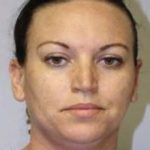
WAILUKU -- A woman acquitted of murder by reason of insanity showed no symptoms of mental illness 15 months after she caused a crash that killed two women and poses a low risk of danger to herself or others if released into the community, a psychiatrist testified Friday.
Dr. Martin Blinder, a forensic and clinical psychiatrist, said Ashley Wellman "is no longer an inpatient-type patient."
"When they're no longer a danger to themselves or others . . . it's very difficult to justify keeping them in a hospital," he said.
"Had Ms. Wellman come knocking on the door of the state hospital and I'm the admitting psychologist,
I wouldn't admit her," Blinder said. "If I can't justify admitting her now, how can I justify keeping her for weeks and months?"
Appearing by videoconference from the Hawaii State Hospital on Oahu, Blinder testified before 2nd Circuit Mental Health Court Judge Richard Bissen, who will decide what happens to Wellman next. Options range from conditional release to committal to the Hawaii State Hospital, where she has been held temporarily since her acquittal Aug. 7.
Wellman, 34, of Waiehu was indicted on murder charges for the crash the morning of Oct. 8, 2016, when she ran a red light while traveling at least 127 mph in the uphill direction on Haleakala Highway, according to a police investigation.
Police said the 2011 silver Nissan Altima driven by Wellman broadsided a white 1998 Toyota Tacoma pickup truck that had been turning left from Makani Road onto the highway. Pukalani residents Debi Wylie, 63, who was driving the truck, and her passenger and partner Traci Winegarner, 57, died at the scene of the crash.
In acquitting Wellman of the charges, 2nd Circuit Judge Peter Cahill said three doctors who conducted court-ordered psychiatric or psychological examinations of her agreed that, at the time of the crash, she was affected by a physical or mental disease, disorder or defect that substantially impaired her capacity to conform her conduct to the requirements of the law.
The same three doctors were ordered to prepare reports on her risk of being a danger.
During earlier testimony, psychologist George Choi said his opinion was that Wellman should be committed to the state health director for treatment "for an indeterminate amount of time" before she can be discharged into the community.
In contrast, state psychologist Alex Lichton said Wellman "presents a relatively low probability of danger" if she is released into the community under recommended conditions.
While Choi and Lichton met with Wellman after she was acquitted to assess her dangerousness, Blinder sent a letter to the court referring to his report based on his examination of Wellman on Jan. 4.
Asked why he didn't interview Wellman again, Blinder said, "I think it was a lack of understanding on my part that an examination was to take place. Certainly, I would routinely do that. Why I didn't do it in this case, I just can't recall."
Blinder, who has about 50 years' experience as a psychiatrist, said it was his opinion that at the time of the fatal crash, Wellman "was substantially impaired and had reached that threshold in Hawaii for criminal nonresponsibility."
"I think she had a psychotic delusion that her life was at risk," he said. "I think you have this nutty getaway in the automobile."
But when he interviewed her on Jan. 4, "there didn't appear to be a substantial risk either to hurt herself or to others," Blinder said.
"Obviously, this is a troubled individual who's had cognitive, emotional and behavioral problems all of her life," Blinder said. "So certainly compared to someone with no such problems, she is a higher risk."
She didn't appear to have suicidal intentions when he interviewed her, Blinder said.
"She was essentially symptom free, certainly no morbid 'I don't want to live, I'm a burden to others' kind of thing," he said. "Indeed, right after this terrible accident, she repeatedly told doctors she had no suicidal thoughts, didn't feel well but wasn't taking this malevolent form of wishing to take her life or anybody else's."
Asked by defense attorney Matthew Nardi whether Wellman's risk of danger to others was high, medium or low, Blinder said "low."
"So she was in a very different place psychiatrically in October 2016 than she was in January of 2018?" Nardi asked.
"That's correct," Blinder replied.
"Is it common for there to be such a large change from volitional and cognitive capacity in little less than a year and a half?" Nardi asked.
"Yes," Blinder said. "They have very good treatments for the condition that gave rise to her destructive behavior. They work."
Asked whether there was concern that the symptoms Wellman experienced the day of the crash would reappear, Blinder said, "I think we have to be alert to that possibility, yes."
"Am I worried she could go out right then and there and do something destructive? The answer to that is no," Blinder said. "This does not close the door or my eyes to the need for vigilance on the part of her support system and the people responsible for her care."
He said that if Wellman were released, she would have to see her doctor regularly.
"She's got to be around people who care about her and have some insight dealing with a mentally ill individual who can decompensate and have a plan in place should she show signs of unraveling," he said.
He said someone also should monitor her prescriptions to make sure she was at least picking up her medication.
"The bottom line is if she's supervised and monitored with people that have the expertise to recognize somebody is getting close to the edge again, I think that would be appropriate and our best assurance we're not going to be sitting here having this trial again in two years," Blinder said.
He said Wellman appeared to be a compliant patient.
"She's complied with her treatment," he said. "She's complied with therapeutic instruction. And she's medication compliant. Not every patient that is discharged has that track record.
"So she's a 'good patient.' ''
He said the records he reviewed didn't indicate that Wellman was resistant to treatment.
"She seemed grateful that treatment was available to her," Blinder said.
Under cross-examination by Deputy Prosecutor Andrew Martin, Blinder agreed that the six sentences in his report describing Wellman's psychiatric history were largely based on what she told him.
Before interviewing her, Blinder said he had reviewed Kaiser and Maui Community Correctional Center records about Wellman but not other documents such as police reports and records of her hospitalizations and psychiatric and medical history, which he acknowledged were important.
He said he had seen the records, which were provided to him by Nardi, before testifying Friday.
"Sometimes it doesn't make any difference," Blinder said. "You have all of the data that point to one thing, but the patient goes out and does something different. Yes, it's important. But unfortunately, it's not enough."
"Even having all of the information that could possibly be made available to you in assessing risk of dangerousness - even that's not enough to accurately predict dangerousness?" Martin asked.
Blinder said that was right, referring to his experience in post-discharge planning for patients.
"We have agreed this patient was safe and ready to go out, and on the way home they jump off the bridge," he said. "So we do our best, but even our best in this particular area of psychiatry is not very good."
Martin asked if it would be worse if there was barely any information to make an assessment.
"I suppose in some cases, that's true," Blinder said. "In Ms. Wellman's case, I think I have enough information to give an answer that's good. In this moment, at this time and for some weeks proceeding, there's no reason to be concerned or alarmed and nothing that happened in 1913 or 2013 would change that answer. It's how she is the day she walks out of the hospital. That probably would be a good time to examine her, but even then it's fraught with error as a predictive device.
"I've had enough patients where I had everything and it didn't make a difference. It's the nature of the illness where patients can change. It's a tough thing that's asked of us. I will concede the more information you have, the more secure we are in our predictions."
The hearing is scheduled to continue Nov. 9 with arguments by attorneys and a possible ruling by Judge Bissen.
* Lila Fujimoto can be reached at lfujimoto@mauinews.com.