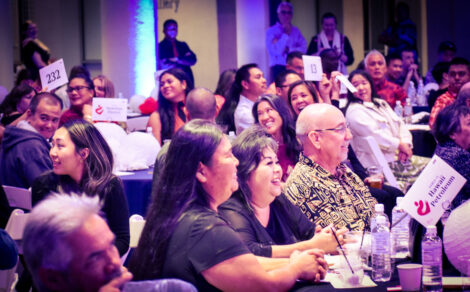
Brother of Sadako Sasaki coming to Maui
The older brother of Sadako Sasaki, the 12-year-old victim of the atomic bombing of Hiroshima who touched the world with her folding of origami cranes in hopes of recovery, will be appearing at Wailuku Hongwanji Mission at 5 p.m. Wednesday to share stories of his sister.
Masahiro Sasaki also will be bringing with him one of Sadako’s cranes, made in 1955. He will be visiting Maui with Sadako’s nephew, Yuji Sasaki, who will sing a few songs in memory of Sadako at Wednesday’s event.
Sadako was 2 years old when an American B-29 bomber dropped the world’s first nuclear bomb on Hiroshima on Aug. 6, 1945, during World War II. She was about a mile away from the blast, but survived, apparently uninjured.
All was well until the 7th grade, when she felt tired and dizzy and collapsed one day, according to the Hiroshima International School website. Her parents took her to a Red Cross hospital, where she was diagnosed with leukemia, attributed to her exposure to radiation from the bomb blast and the “black rain” of radiation that fell from the sky after the bombing.
Sadako was hospitalized on Feb. 21, 1955, and given a year to live. She spent her last days in a nursing home folding small origami paper cranes with the hope of making a thousand of them – a good luck wish for recovery. She died Oct. 25, 1955, after folding 644 cranes, according to a news release from Wailuku Hongwanji.
Her friends and family helped finish her dream by folding the rest of the 1,000 cranes, which were cremated together with Sadako.
Her story was chronicled in “Sadako and the Thousand Paper Cranes,” a historical fiction children’s book by American author Eleanor Coerr published in 1977.
Sadako’s brother disputes the story’s claim that she fell short of her goal of 1,000 cranes. He says she actually folded more than 1,300 cranes, according to the news release from Wailuku Hongwanji.
After her death, Sadako’s friends published a collection of letters to raise funds for a memorial to her and all of the children who had died from the atomic bomb. In 1958, a statue of Sadako holding a golden crane was installed in the Hiroshima Peace Park. The statue is draped with cranes made by children from around the world, with the cranes becoming a symbol of peace.
At the foot of the statue is a plaque that reads: “This is our cry. This is our prayer. Peace on Earth.”
For more information, contact the Rev. Shinkai Murakami at 244-0406.
Local News
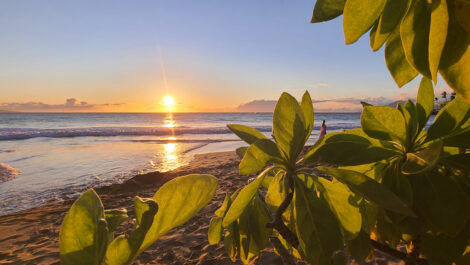
Photo of the Day: Po‘olenalena Sunset
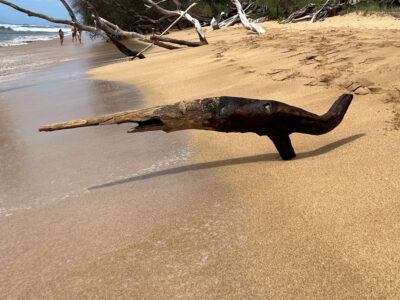
Photo of the Day: Prehistoric Wood
Continued water conservation urged for South Maui
The County of Maui Department of Water Supply continues to urge all South Maui customers to conserve water today, ...

Aloha FurEver Pets Foundation achieves 501(c)(3) nonprofit status

Rotary Club of Lahaina Sunset to award five academic scholarships