
Golden Rule
Historic vessel that sailed to prevent nuclear test takes to the seas again for peace voyage
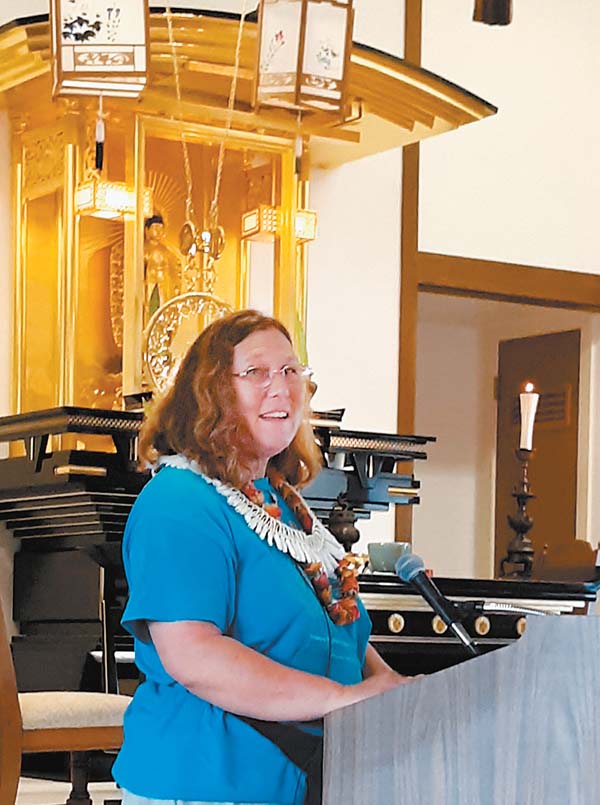
Helen Jaccard speaks to an audience of 40 people about the purpose of the Veterans for Peace project, which is to stay active and aware of the threats of nuclear weapons. She gave her account Tuesday as part of the Hiroshima/Nagasaki Remembrance at Kahului Hongwanji Mission.
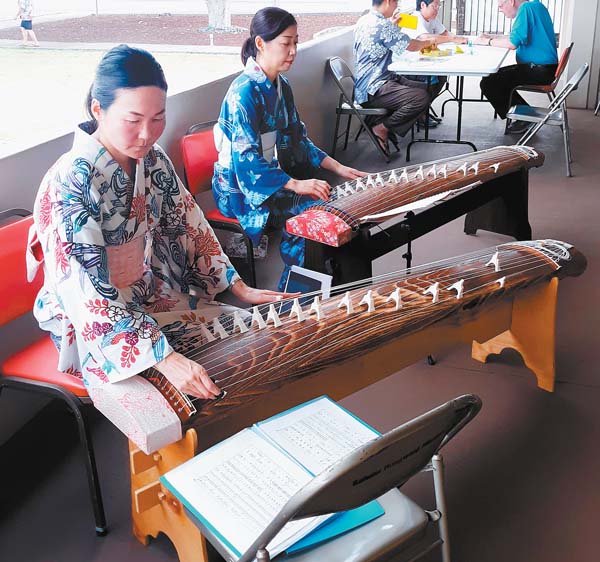
During the Hiroshima Nagasaki Remembrance program Tuesday night at Kahului Hongwaji, Mika Inaba and Koko Wolbe performed koto music.
Helen Jaccard speaks to an audience of 40 people about the purpose of the Veterans for Peace project, which is to stay active and aware of the threats of nuclear weapons. She gave her account Tuesday as part of the Hiroshima/Nagasaki Remembrance at Kahului Hongwanji Mission.
During the Hiroshima Nagasaki Remembrance program Tuesday night at Kahului Hongwaji, Mika Inaba and Koko Wolbe performed koto music.
Trending
KAHULUI -- Helen Jaccard knows exactly where she will be a year from Tuesday -- in Japan on the Golden Rule, the historic 36-foot anti-nuke sailboat, to commemorate the 75th anniversary of the nuclear bombings of Hiroshima and Nagasaki.
But in the meantime, the Golden Rule and its crew have embarked on a peace voyage through the Hawaiian Islands, Marshall Islands, Guam and Okinawa.
"We're going to bear witness to the chromosomal damage from the radiation and the rest to what has been done to people and continue to do to people," Jaccard said. "We're also fighting against militarism of the United States bases."
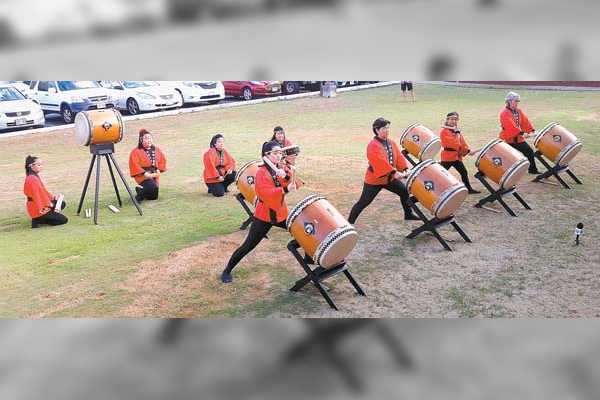
Jaccard, who is the project manager for Veterans for Peace Golden Rule, was the keynote speaker at the Hiroshima Nagasaki Remembrance on Tuesday night at Kahului Hongwanji Mission. The program consisted of origami crane making, traditional koto music, a taiko performance, an opening Hawaiian chant and aspirations from Kahului Hongwanji Mission Minister Richard Tennes.
"Our programs include acknowledging native people's land that we are on, hoping that they will welcome us onto their land," Jaccard said.
The project continues the legacy of the 1958 peace voyage of the Golden Rule, which attempted to stop U.S. atmospheric nuclear testing of the hydrogen bomb by sailing from California to the testing site in the Marshall Islands, Jaccard said.
The crew was stopped and arrested in Honolulu, but the voyage gained publicity worldwide. Their mission was to influence citizens to understand the dangers of nuclear testing and to pressure their governments to stop.
The Marshall Islands still suffer from the effects of 67 nuclear bombs tested by the United States.
"It was a very inspirational tactic that contributed to the ending of the Cold War," she said. "It contributed to President (John) Kennedy signing the Nuclear Test Ban Treaty of 1963, and so we know that this tactic works, and we know that our boat inspired the start of Greenpeace, and therefore, a whole bunch of other activists' boats."
The Golden Rule sank in 2010 during a storm off the U.S. West Coast, she said. It was hauled up a year later by Veterans for Peace in California.
The boat's resurrection in 2011 is what influenced Jaccard to join the project.
"She was a wreck, tiny," she said of the boat. "We really weren't doing anything at the time. We moved the RV into the boatyard and just rolled up our sleeves and got to work . . . I did a lot of the sanding, painting and varnishing. I made the seat cushions and mast booths and stuff like that."
After five years of restoring the Golden Rule, it set sail again in 2015 on a three-month excursion to continue its mission for a nuclear-free and peaceful world.
"It was almost all volunteer labor and local businesses donated materials," she said. "We had lots and lots of fundraisers, and hundreds of donors came together and said they would help here and there."
But the Golden Rule still needed a crew, so Jaccard created an online application form to seek four to five experienced crew members.
"To test that whole process, I filled it out myself," she said with a laugh. "I was floored when I heard I was being considered for crew. I knew nothing about sailing, nothing."
Despite her lack of sailing experience, Jaccard said she learned quickly. And just like that, the Golden Rule was back in the water, bringing attention to the health and environmental effects of nuclear weapons.
The project spreads awareness of "resisting nuclear madness" and the history of the Golden Rule through speaking engagements at schools, churches and community groups.
"So after we talk about the history of the boat and how effective this tactic can be, then we have to accomplish our mission, which is to talk about nuclear issues today," Jaccard said. "We need to declare that we will not be the first to use nuclear weapons, we need to get rid of the trillion dollar nuclear modernization program, we need to take our ICBMs off of hair trigger alert and we need to say that our president does not have the sole authority to launch a nuclear weapon."
On the first leg of its current voyage, the Golden Rule arrived in Hilo harbor on July 31 after a 25-day sail from San Diego. The crew plans to stay around Hawaii island for August before arriving in Maui waters between Sept. 11 and 29.
From there, the crew will head to Lanai and Molokai between Oct. 1 and 17, before sailing to Oahu and Kauai.
"I've always been against nuclear weapons, of course, when we first started hiding under our desks when I was a child during the Cold War," Jaccard said. "Later on, I became against nuclear power when I started reading about subatomic particles and understanding how dangerous radiation is."
The Hiroshima and Nagasaki Remembrance event was made possible by local sponsors Maui Seasons for Peace, Wailuku Jodo Mission, Iao United Church of Christ, Maui Peace Action and Rissho Kosei-kai Buddhist Church of Hawaii.
It is held on the anniversary of the atomic bombing of Hiroshima on Aug. 6, 1945. The world's second nuclear bombing occurred on Aug. 9, 1945 in Nagasaki.
For more information, visit the project's website at vfpgoldenruleproject.org or follow them on Facebook at GoldenRulePeaceBoat.
* Dakota Grossman can be reached at dgrossman@mauinews.com.