Community members who died in 2019 are remembered
Maui County lost leaders, teachers, veterans, keiki and conservationists
Maui County lost local community leaders, a talented music teacher, a counterculture icon and more in 2019.
Here’s a look back of some of the residents who left us in the past year.
Harold ‘Oly’ Gustaf Olsten, 92
Oct. 6, 1926 — Jan. 24, 2019
In 1967, Olsten and wife Shirley left the cold Midwest and packed up their three school-aged sons, eventually arriving on Maui. Olsten
began a coral jewelry factory on Vineyard Street in Wailuku called “Hawaiian Corals” and sold wholesale local black and pink coral jewelry to stores statewide.
He later sold the jewelry business and went into the T-shirt printing business, a fast growing industry at the time. The “T-Shirt Factory” opened in 1972 as a family-run wholesale operation, close to the airport. At one point there were eight retail stores. The family also flew their red-and-white Cessna 172 with the “T-Shirt Factory” banner in tow, advertising to beaches and tourist resorts. Locals saw it, too.
Lance Hayami Jo, 80
March 4, 1938 — Feb. 23, 2019
Jo was a longtime Baldwin High School band teacher who inspired students with music, taught them life lessons and encouraged them to succeed.
His teaching tenure at Baldwin was his longest, spanning from 1967 to 2003, where he was responsible for the symphonic, concert, jazz and pep-marching bands. He also conducted a pit orchestra that provided live music for Baldwin’s Performing Arts Learning Center musicals.
He also was an assistant conductor for the Maui Community Band.
For 21 years, he served as a clinician and conductor on the faculty of the Pacific Music Institute, a Hawaii Youth Symphony-sponsored summer institute on Oahu.
He was also the music director of the Maui Youth Philharmonic Orchestra for 12 years until 2017.
Hiroshi Arisumi, 98
June 11, 1920 — March 8, 2019
A well-recognized veteran of the 442nd Regimental Combat Team who fought in World War II, Arisumi helped turn the dream of the
Nisei Veterans Memorial Center into reality by drawing public support and funding for the project.
In 1952, he co-founded Arisumi Brothers Inc., building starter homes for many families in Kahului.
In the years after the war, Arisumi also received the Congressional Gold Medal of Honor and the Chevalier de la Legion d’Honneur (Knight of the French Legion of Honor) medal from the government of France for his service in the 442nd and the 232nd Combat Engineers Company. He also received the Nihon Bunka Award from the Japanese Cultural Society of Maui and the Order of the Rising Sun from Japan for his work preserving Japanese culture and promoting cultural exchange.
Donald W. Reeser, 80
May 25, 1938 — March 9, 2019
Reeser was the superintendent of Haleakala National Park for 17 years before retiring in 2005. His list of accomplishments include his innovative use of fencing, which rid Hawai’i Volcanoes and Haleakala Crater of feral goats and pigs, allowing the silversword and other native species to thrive. Under his leadership, the park obtained Ka’apahu watershed, home to virgin koa forests and native bird populations. He also partnered with helicopter companies to forge a plan to alter flying routes to preserve the serene environment of the crater, with similar plans then adopted by national parks throughout the nation.
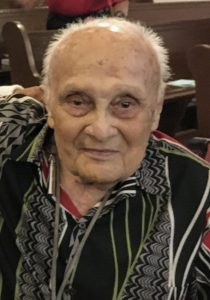
William D. ‘Bill’ Tavares, 97
Nov. 25, 1921 — May 2, 2019
For 19 years until his retirement at the end of 1978, Tavares was the principal at Makawao School, where he mentored many teachers
and made an impact on parents and students, with some recalling him as strict but also fair. He was also described as articulate and eloquent.
He was concerned about local families being taxed out of their homes, and was relentless in his mission as a founder of the Committee for More Equitable Taxation, or COMET. Tavares and his family worried about their property tax bills each year as properties around the family home in Kuau were bought and sold, significantly driving up the tax bill for the property that the Tavares family had owned for more than a century.
COMET pushed for the creation of the “circuit breaker” property tax credit program in the late 1980s, which still stands today, although slightly different.
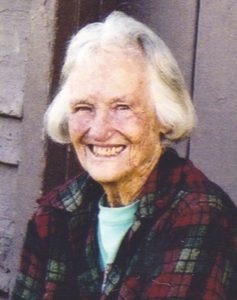
Mary Carol
McEldowney Evanson, 97
Dec. 21, 1921 — May 9, 2019
Evanson founded the Friends of Haleakala National Park advocacy and educational group and fought for environmental causes from mauka to makai.
Besides her beloved mauna, Evanson also fought to protect native species, endangered shorelines and imperiled water sources.
At Haleakala, “my mountain,” as she called it, she counted the crater’s silverswords, headed up the adopt-a-nene program and wrote up the Friends of Haleakala National Park newsletter.
She questioned the need for more observatories on Haleakala, supported the legislation to reduce helicopter noise in the crater, raised awareness of the miconia threat and spoke out against damage by commercial horse tours along the Sliding Sands trail. In 1999, she became the honorary superintendent of Haleakala National Park for “outstanding sustained contributions.”
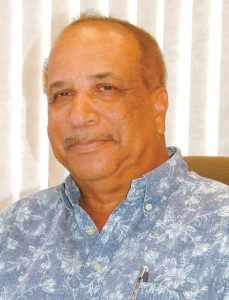
William ‘Willie’ Kennison, 73
Feb. 25, 1946 — May 21, 2019
Kennison was the retired Maui Division Director of the International Longshore and Warehouse Union, and he rose through the ranks to become the union leader on Maui.
He was the protege of renowned union leaders, the late Thomas “Tommy” Trask, the late Thomas Yagi and John Arisumi.
Kennison negotiated contracts for sugar, pineapple, general trades and tourism workers. He worked for the union for 30 years.
He was also active in many county boards and commission and nonprofit groups, including the Maui County Liquor Control, Police and Fire and Public Safety commissions, and the Maui Memorial Medical Center and Hale Mahaolu board of directors.
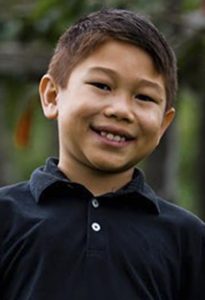
Tavin Hashimoto, 10
April 11, 2009 — June 4, 2019
Like Trucker Dukes of Haiku, Tavin won the admiration of many on Maui for his strength in the face of cancer.
He was diagnosed at 8 years old with acute myeloid leukemia on March 17, 2017. For two years, he fought through chemotherapy treatments. But on March 16, 2018, doctors discovered the cancer had returned. Tavin died at Hospice Maui in June.
Family and friends remembered his lively spirit, infectious smile and how much he “glowed.” They rallied around the hashtag #TavinTuff.
While he couldn’t play contact sports due to his condition, Tavin was an adventurous kid who loved going to the driving range with his uncle, and loved playing with his friends at Doris Todd Christian Academy and with his younger siblings.
“No matter how hard the treatments were, he never said ‘no,’ ” father Davin Hashimoto said. “Whatever he needed to do, he would do it. He was truly a tough, tough, tough boy.”
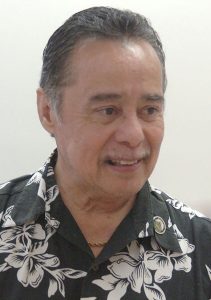
Dennis ‘Danny’ Alfred Mateo Sr., 68
Aug. 21, 1951 — Sept. 24, 2019
He was a Maui County Council member for 10 years, holding the Molokai residency seat and also spending time as the council’s chairman.
He later served as an executive assistant to former Mayor Alan Arakawa and was appointed Maui County clerk in 2013, retiring from the post in December 2018.
Even before his tenure on the council, Mateo was serving the people of Molokai, as director and co-manager of Aloha Festivals on Molokai, a director of the West Molokai Association and a member of the Molokai Citizens Advisory Committee. He was also a director for the ARC of Maui, which works with people with disabilities.
In 2009, he was named one of 20 Outstanding Filipinos Abroad by Filipino Image magazine. He was also the first council member of Filipino descent to be elected as Maui County Council chairman.
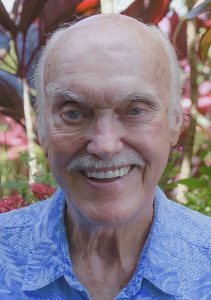
Ram Dass, 88
April 6, 1931 — Dec. 22, 2019
Born Richard Alpert, the psychologist, along with cohort, Timothy Leary, lectured on the “healing effects of psychedelics” at
college campuses across the country in the 1960s. The two influenced a generation to “turn on, tune in, and drop out,” with psychedelics providing the inner fuel during a turbulent era of social change, sexual liberation and political unrest.
In 1967 through 1968, Dass journeyed to India, where he received his name “Ram Dass,” which means “Servant of God.” Dass then traveled to the U.S. bringing his spiritual teachings.
He wrote the book “Be Here Now” in 1971, which at the time was called the “hippie bible” and covered spirituality, yoga and meditation. It has sold more than 2 million copies, according to Dass’ foundation, “Love Serve Remember Foundation.”
In 1997, Dass suffered a hemorrhagic stroke that left him with paralysis and expressive aphasia. He recovered his speech and continued teaching online and later at retreats on Maui.
After a medical emergency in 2004 on Maui, which put him in the hospital for a month, Dass was unable to fly. Friends said Dass then never left. He continued to have retreats on Maui and greeted followers at weekly swims at Kamaole Beach Park I in Kihei.
* Melissa Tanji can be reached at mtanji@mauinews.com.
-
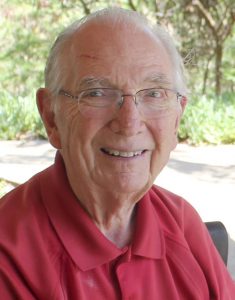
- ‘Oly’ Olsten
-
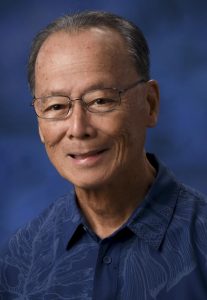
- Lance Hayami Jo
-
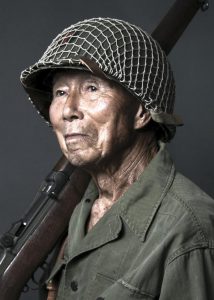
- Hiroshi Arisumi
-
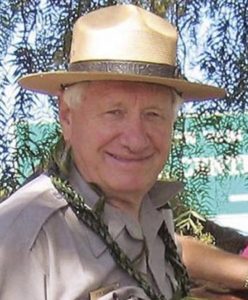
- Donald Reeser
-
- ‘Bill’ Tavares
-
- Mary Evanson
-
- ‘Willie’ Kennison
-
- Tavin Hashimoto
-
- ‘Danny’ Mateo
-
- Ram Dass
Local News
47-unit workforce housing project for educators opens in Lahaina
Rotary Club of Lahaina Sunset to host Hale Kau Kau board president
Registration open for Rotary-sponsored workshop for high school students

Barry Wurst: ‘Lee Cronin’s The Mummy’ should stay buried in the desert forever

MIL surfing: Maui Prep boys, Lahainaluna girls secure team titles