The case of the stinging hitchhiker
KIA'I MOKU
In March of this year, a Lahaina couple reported a stinging but slow-moving, tiny ant — armed with a large stinger that left itchy, red welts. Maui Invasive Species Committee little fire ant crew leader, Monte Tudor-Long, responded to their report, concerned that the couple had uncovered a new little fire ant infestation. MISC regularly responds to stinging ant reports from members of the public in an effort to prevent the spread of little fire ants. After samples of the stinging insects were collected and examined, Monte was shocked to find that this was not an ant at all.
Hawai’i has no native ants. About 60 ants have become established in our islands since humans arrived. One of the most damaging is the little fire ant, which accidentally arrived on Hawaii island in the late 1990s, hitchhiking on imported nursery plants. Little fire ants eventually spread to other islands, including Maui, where they were first discovered on an organic farm in 2009. In Hawaii, these invasive ants create multiple super colonies that cover the trees and the ground, quickly outcompeting other insects in the area. In homes and communities, encounters with little fire ants have left painful welts on humans and have blinded pets and livestock from repeated stings to their eyes. Little fire ants are considered by the International Union for Conservation of Nature as one of the world’s 100 worst invasive species and are currently being targeted for removal in Maui County.
When Tudor-Long collected several common ants from the Lahaina report, he expected to also find little fire ants based on the couple’s experience and the red welts they showed him. After viewing them under a microscope, the suspect was ruled out as being a little fire ant because its features didn’t match up to one — in fact, its features didn’t match any ant known to be in Hawaii. Upon reaching out to experts to identify this “mystery ant,” it was revealed that it was actually a tiny wasp.
Cephalonomia gallicola is a flightless wasp that arrived in Hawai’i around 1930, hitchhiking in beetle-infested cardboard from India. It typically preys on woodboring and tobacco beetles, which make their homes in everything from shipping materials, furniture and kitchen cupboards. Parasitic wasps like this one are known to infest sofas and other furniture, particularly secondhand furniture, for this buffet of beetles. This is also where they typically encounter and sting unsuspecting humans.
The Lahaina couple identified the primary source of stings from a recently purchased, secondhand couch — the same location Tudor-Long collected the wasp. Although different treatments are available, the couple opted to dispose of their couch and rid their home of this uninvited guest.
Although cases like this stinging, flightless parasitic wasp may not be common, it is a good example of how pests arrive in Hawai’i. On average, one new species arrives in the Hawaiian Islands every three days, usually as an accidental hitchhiker. Although they may not become invasive or established in the wild, reporting unusual and different-looking species right away helps officials respond and identify new potential threats. If you see a strange new plant, insect, or animal, or get stung by a suspect ant, report it to www.643pest.org.
* Serena Fukushima is the public relations and education specialist for the Maui Invasive Species Committee. She holds a bachelor’s degree in environmental studies and a graduate degree in education from the University of Hawaii at Manoa. “Kia’i Moku, Guarding the Island” is written by the Maui Invasive Species Committee to provide information on protecting the island from invasive plants and animals that threaten our islands’ environment, economy and quality of life.
-
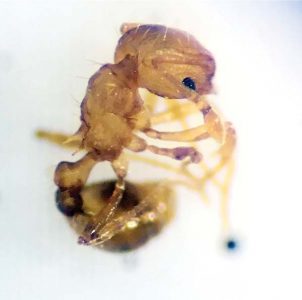
- Microscopic image of a little fire ant show similarities in their appearance (both are armed with stingers that inflict painful stings), however, they are completely different species. If you think you have been stung by little fire ants, report it right away at www.643pest.org. — MAUI INVASIVE SPECIES COMMITTEE photo
-
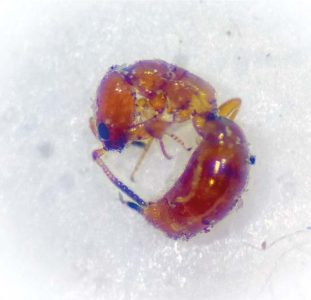
- Microscopic image of a wasp show similarities in their appearance (both are armed with stingers that inflict painful stings), however, they are completely different species. If you think you have been stung by little fire ants, report it right away at www.643pest.org. — MAUI INVASIVE SPECIES COMMITTEE photo
Local News
Photo of the Day: Magnificent Ti
USGS: 6.0 earthquake on Hawaii Island felt across state

Valley Isle Kennel Club: An old pacemaker can save a dog’s life
Barry Wurst: ‘Obsession’ is an intense but thoroughly unpleasant horror film
Writer and director Curry Barker’s “Obsession” begins with Bear (played by Michael Johnston), a mopey music ...

Pet of the Week: Malu