
Coffee leaf rust never sleeps
KIA'I MOKU
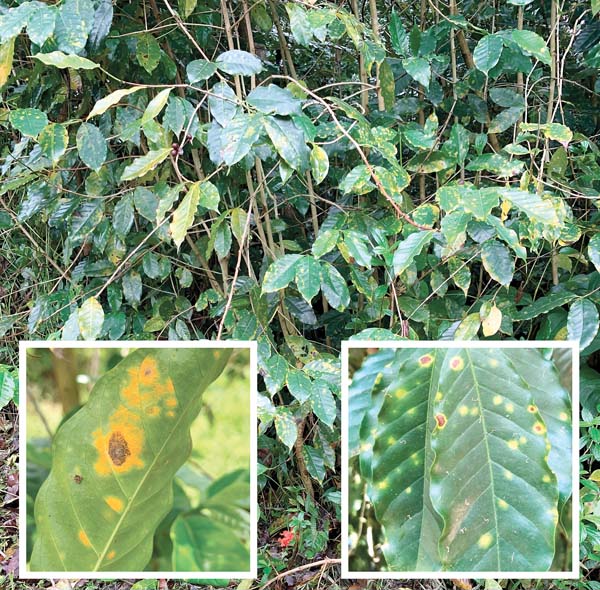
A coffee tree infected with coffee leaf rust will display irregular-shaped, yellowish spots on the surfaces of the leaves. Underneath the leaves, there may be powdery spores, yellow to orange in color, that can be spread on the wind or by humans through footwear, vehicles, clothing and tools. Learn how to dispose of infected trees, decontaminate gear and report coffee leave rust at www.hawaii coffeeed.com. — Andrea Kawabata and HDOA photo
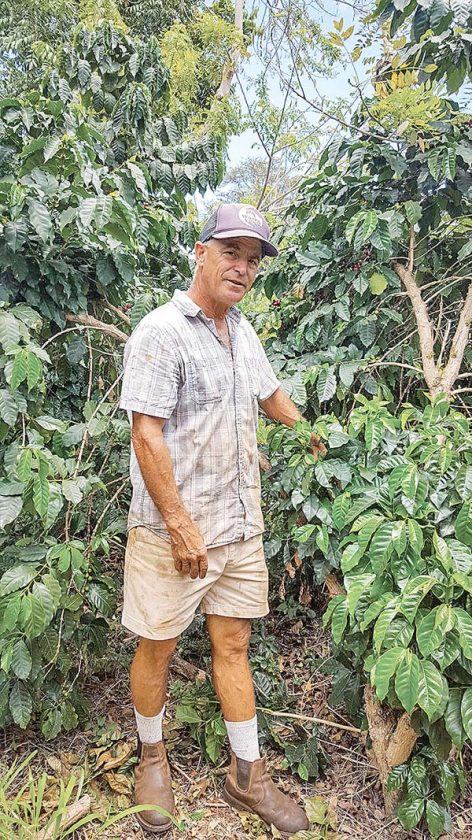
Gerry Ross, president of Maui Coffee Association and farmer at Kupaa Farms, stands amongst his organic coffee trees. Maintaining coffee tree health by pruning, weeding and using fungicide sprays has helped coffee farmers like Ross keep coffee leaf rust at bay. — Ann Tuomela photo
A coffee tree infected with coffee leaf rust will display irregular-shaped, yellowish spots on the surfaces of the leaves. Underneath the leaves, there may be powdery spores, yellow to orange in color, that can be spread on the wind or by humans through footwear, vehicles, clothing and tools. Learn how to dispose of infected trees, decontaminate gear and report coffee leave rust at www.hawaii coffeeed.com. — Andrea Kawabata and HDOA photo
Gerry Ross, president of Maui Coffee Association and farmer at Kupaa Farms, stands amongst his organic coffee trees. Maintaining coffee tree health by pruning, weeding and using fungicide sprays has helped coffee farmers like Ross keep coffee leaf rust at bay. — Ann Tuomela photo
Trending
You may be holding a cup of it now as you read this. Warm and comforting, coffee is the fuel for many facing an early morning or a much-needed pick me up. In the United States, coffee is the most commonly consumed beverage (more than tap water!) and percolates more than $200 billion into the United States economy. Hawaii is the largest producer of coffee in the country, with over 1,400 coffee farms statewide. It is the second-highest value crop, contributing nearly $150 million annually to the economy of the Aloha State. The Kona Typica variety of coffee, primarily grown in the Kona region of Hawaii island, is world-renowned. Maui also contributes to the Hawaii coffee industry, with over 1,000 acres in active production and the second greatest number of coffee farmers in the state.
A fungus that has been spreading and threatening the global coffee industry has now arrived on our shores. Coffee leaf rust (Hemileia vastatrix) is the most destructive and economically devastating disease of coffee worldwide. It was first discovered in Africa in 1861 and has slowly spread throughout coffee-growing regions worldwide. In October 2020, a Haiku coffee farmer reported suspicious orange spots on their coffee leaves. The Hawaii Department of Agriculture soon confirmed it as Hawaii's first case of coffee leaf rust. It is now found islandwide on Maui and confirmed on Oahu, Lanai and Hawaii island. Kauai has had no reported findings to date.
Coffee leaf rust spores spread quickly on the wind and can also be easily moved by humans. An infected plant will display irregular-shaped, yellowish spots on the surfaces of the leaves. Underneath the leaves, there may be powdery spores, yellow to orange in color. The fungus usually appears on the lower leaves and slowly moves up the tree. Infected leaves die and drop, which can inevitably reduce production and, in severe cases, kill the tree as it becomes unable to photosynthesize.
Maintaining healthy plants and good sanitation practices are integral in managing coffee rust. Gerry Ross, president of the Maui Coffee Association and farmer at Kupa'a Farms, discovered coffee leaf rust on his trees shortly after its arrival to Maui.
"We are vigilant in observing all of our crops and caught coffee leaf rust on our trees early," Ross said. "Maintaining tree health is key. We have an active pruning program to prevent the spread of the fungus and use organic fungicide sprays to manage it."
Pruning, using fungicide sprays and controlling weeds around the base of coffee trees are some methods of control. Still, wild coffee has also proven to be a host susceptible to this pest. Ross sees a silver lining, though.
"Wild coffee that dies from coffee leaf rust would reduce habitat for coffee berry borer, hopefully bringing its populations down," he said.
The coffee berry borer is an invasive beetle that arrived to Hawaii in 2010. It bores into coffee beans and can ruin entire harvests if left unchecked.
Long-term plans are in motion to further combat coffee leaf rust. Research in Hawaii is currently underway on coffee leaf rust-resistant cultivars; however, it may take some time to import, breed and multiply new coffee varieties for that superior cup of Hawaii-grown joe.
Slowing the human spread of coffee leaf rust is possible through proper sanitation measures. Aut Fleming, noxious weed specialist with Maui's DOA Plant Pest Control Branch, recommends decontaminating after being in areas with coffee leaf rust.
"If you are visiting, working on or touring coffee farms, make sure to decontaminate with at least 70 percent alcohol or a 10 percent bleach and water solution," Fleming said. "If you think you have come into contact with coffee leaf rust, wash your clothing, footwear and any other gear that may have been in contact with it. Use laundry detergent and hot water, and dry on high heat."
Fleming also encourages reporting suspect coffee leaf rust and following proper disposal procedures.
Although this new pest is daunting, people like Ross have hope.
"Farmers are resilient," he said. "We will find a way to adapt. It's not game over."
To learn more about coffee leaf rust and how to report it, visit www.hawaiicoffeeed.com, an online resource created by Andrea Kawabata, assistant extension agent with the College of Tropical Agriculture and Human Resources.
* Serena Fukushima is the public relations and education specialist for the Maui Invasive Species Committee. She holds a bachelor's degree in environmental studies and a graduate degree in education from the University of Hawaii at Manoa. "Kia'i Moku, Guarding the Island" is written by the Maui Invasive Species Committee to provide information on protecting the island from invasive plants and animals that threaten our islands' environment, economy and quality of life.