Comet discovered by Haleakala telescope may be visible in spring
The Maui News
A new comet that was discovered this summer by the University of Hawaii’s Pan-STARRS1 telescope atop Haleakala may become bright enough for spectators to see as it nears Earth.
The comet’s name is C/2021 O3 (PANSTARRS) and is about four times as far from the Earth as the sun. It will become brighter and could be visible to the naked eye in late April or early May 2022.
Spectators on the Neighbor Islands may be able to see the comet easier than from Oahu, where there is more light pollution.
“We are thrilled that Pan-STARRS has discovered a new comet that many people on Earth may be able to see,” said UH Institute for Astronomy’s Richard Wainscoat, who leads the Near-Earth Object survey project with Pan-STARRS. “Although it may be a little challenging to see with the unaided eye, it should be easy to see with binoculars or a small telescope.”
IfA astronomer Robert Weryk first spotted the nonthreatening comet on July 26, and after it was reported to the Minor Planet Center, telescopes from around the globe gave confirmation.
Pan-STARRS searches the sky every night for moving objects in an effort to discover near-earth objects, such as asteroids and comets that may pose a threat.
As comet C/2021 O3 (PANSTARRS) approaches the Earth and the sun next spring, the sun’s radiation will warm the surface of the comet, which will cause it to “brighten as gas and dust are released from its icy surface,” according to the news release.
Wainscoat said that the comet will be closest to the sun on April 20, 2022, and will pass inside Mercury’s orbit. Some comets do not survive close passages to the sun.
Astronomers say the best chance to see the comet may be in the first few days of May, before the moon becomes too bright, when the comet will be low in the western sky after sunset.
UH astronomers will use telescopes on Maunakea to study the comet as it approaches and after it has passed the sun.
Pan-STARRS is a 1.8-meter telescope and is a world leader in finding larger near-earth objects. It’s funded by NASA’s Planetary Defense Coordination Office through its Near-Earth Object Observations Program.
-
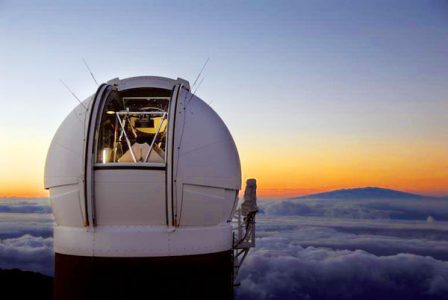
- The Pan-STARRS1 telescope, which sits near the summit of Haleakala, helped University of Hawaii astronomers to discover a comet that may be bright enough for spectators to see in May 2022. Rob Ratkowski Photo
-
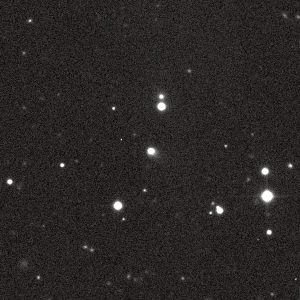
- The newly discovered comet (center) is photographed among the stars. UH Institute of Astronomy Photo
Local News

Photo of the Day: Magnificent Ti
USGS: 6.0 earthquake on Hawaii Island felt across state

Valley Isle Kennel Club: An old pacemaker can save a dog’s life
Barry Wurst: ‘Obsession’ is an intense but thoroughly unpleasant horror film
Writer and director Curry Barker’s “Obsession” begins with Bear (played by Michael Johnston), a mopey music ...

Pet of the Week: Malu