
Less rain, low streams raise concerns over water supplies
Maui County in severe drought as wet season nears end
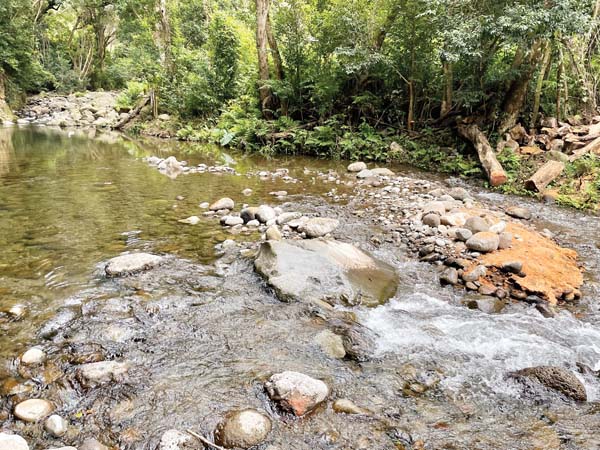
Honokohau Stream is seeing low flow levels due to a recent lack of rainfall. According to the DLNR, the stream is currently flowing at 5.6 million gallons per day, or 37 percent of the stream’s March 8 median of 15.5 mgd. State officials are expressing concerns over water supplies, especially in Maui County, which is seeing severe drought in some places. Photos courtesy of DLNR
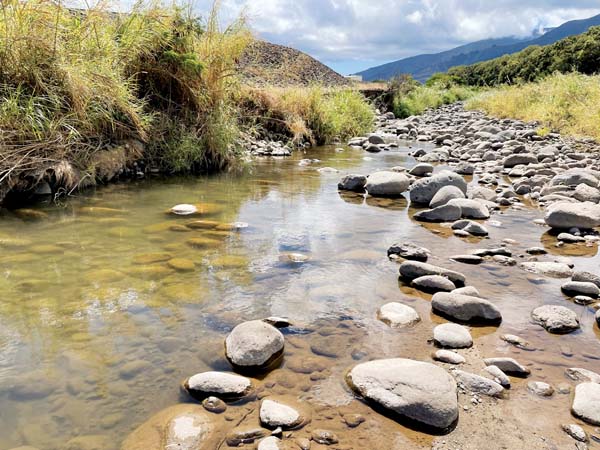
Levels are low for rivers and streams across the county, including at the Wailuku River, shown here. The lack of rainfall and low streamflow has concerned some officials, especially in Maui County, which is heavily reliant on surface water for its potable sources.
Honokohau Stream is seeing low flow levels due to a recent lack of rainfall. According to the DLNR, the stream is currently flowing at 5.6 million gallons per day, or 37 percent of the stream’s March 8 median of 15.5 mgd. State officials are expressing concerns over water supplies, especially in Maui County, which is seeing severe drought in some places. Photos courtesy of DLNR
Levels are low for rivers and streams across the county, including at the Wailuku River, shown here. The lack of rainfall and low streamflow has concerned some officials, especially in Maui County, which is heavily reliant on surface water for its potable sources.
Trending
Lack of rainfall and low-flowing streams are "deepening" officials' concerns over water supplies, with parts of Maui County already in severe drought during what should be the rainy season.
Many streams on Maui are running as low as 5 percent of their median flow, impacting a county that's heavily reliant on surface flow to feed potable water to Upcountry, Central and West Maui customers. The lack of rain and low streamflow will directly affect water supply for these areas and also signal potential consequences for water supplies in the upcoming dry season, the state Department of Land and Natural Resources said Tuesday.
"Normal wet season rainfall has not materialized and streams that are normally gushing with water are barely flowing," Commission of Water Resource Management Deputy Director Kaleo Manuel said in a news release. "This is deepening our already grave concerns about the effects of seasonal drought on water supplies."
The commission is advising people to take immediate actions to reduce water use in Maui County especially, describing current drought conditions as historic.
All eight of the Main Hawaiian Islands are experiencing at least moderate drought, with areas of West and Central Maui as well as northwestern Kauai currently in severe drought, the U.S. Drought Monitor shows.
Maui Nui's vulnerability to drought is due in part to its location in the island chain, explained Maureen Ballard, senior meteorologist with the National Weather Service in Honolulu. Kauai, at the northwest tip of the islands, has a better chance of getting brushed by storm fronts. Hawaii island gets rain because its 14,000-foot elevation mountains help produce showers, which is also why Hana and the southeast slopes of Haleakala also tend to get more rain than other parts of Maui.
Ballard said Tuesday that since Jan. 1, Kahului has recorded only a quarter-inch of rain; normally by now the area would've seen 5.09 inches.
"We just really haven't had the rain," Ballard said. "We've of course seen some showers and some fronts that have kind of come down to Kauai and sometimes to Oahu, so those islands have been getting some rain, but they just have been dying out before they reach Maui County."
Last year, Maui County grappled with the worst drought conditions in the state, sparking water shortages for Upcountry, hurting farming and ranching yields and driving axis deer to wander onto roads and developed areas in search of food and water. The federal government approved an agricultural disaster designation for Maui County in March 2021, and the state declared an emergency for the county in November.
A massive storm in early December lifted the county out of drought temporarily, but severe conditions quickly returned, and the prolonged period of below-normal rainfall has led to below-normal streamflow levels across the county, the weather service said in a drought information statement released Thursday. Axis deer are starting to encroach on farm lands again, and satellite-based data indicate deteriorating vegetation health, especially along lower leeward slopes.
"Based on the rainfall outlook, there is a chance that the current drought conditions may ease," the weather service said. "However, the likelihood of drought relief will diminish as the state exits the October through April wet season and enters the May through September dry season. In the dry season, the trade winds will become more persistent, which results in a much lower chance for the easing of drought conditions in the leeward areas of the state."
Continuously monitored streamflow stations across the state are flowing at record-low rates, with some approaching the lowest flows ever recorded, the DLNR said.
Waikamoi Stream in East Maui, for example, is currently flowing at 0.01 million gallons per day, which is 5 percent of the March 8 median of 0.14 mgd recorded over the past 27 years. Honopou Stream, also in East Maui, is flowing at 0.21 mgd, which is 9 percent of the March 8 median of 2.52 mgd recorded over the past 110 years.
Current flows for other streams on Maui are as follows:
• Waihee, 21.39 mgd, 60 percent of its median of 36.84 mgd.
• Honokohau, 5.6 mgd, 37 percent of its median of 15.5 mgd.
• Kahakuloa, 2.55 mgd, 36 percent of its median of 7.11 mgd.
• Hanawi, 1.34 mgd, 21 percent of its median of 6.46 mgd.
• Nailiilihaele, 1.42 mgd, 10 percent of its median of 14.22 mgd.
• West Wailuaiki, 1.01 mgd, 10 percent of its median of 10.34 mgd.
Earlier this week, the county asked West Maui and Nahiku residents to conserve water after a lack of rainfall reduced streamflow that fed treatment facilities and storage tanks.
"As we enter the more typically dry summer months, and without significant precipitation in the next few months, Hawaii could be in store for devastating wildfires this year," Michael Walker, state fire manager with the DLNR Division of Forestry and Wildlife, warned in the news release. "We are seeing this consequence of global climate change, played out on many fronts, including fire seasons that are now year around."
The state is recommending that people learn about how to prevent wildfires and take steps to conserve water, including stopping landscape irrigation and vehicle washing, as well as reducing home water use by taking shorter showers and not running the faucet continuously while brushing teeth.
"Unless we get some good rains during the wet season, it does not bode well as we go forward, except if we do get a springtime storm or a summer storm, hopefully not a tropical storm," Ballard said. "We don't want just one single dump of water; we kind of need some steady stuff so the land can absorb it and start recovering."
* Colleen Uechi can be reached at cuechi@mauinews.com.