
Urban forests support resilience
KIA'I MOKU
Trending
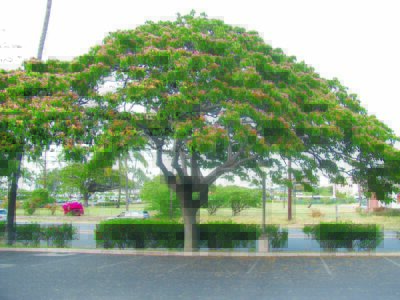
If you have a chance to walk under the monkeypod trees that line High Street in Wailuku, or park in the shade of those towering above the lot on the mauka side of UH-Maui College, you may have appreciated their beauty. If it was a hot day, you'd likely welcome their shade. These trees are part of our urban forest on Maui, adding to the already spectacular landscape. Trees have been part of urban planners' toolkits since the late 19th century, valued as a way to enhance cities and towns. Today, we also know that urban forests are an important way to mitigate the effects of climate change and support healthy environments. How do they do this?
Trees help keep cities cooler. During the day, buildings and pavement absorb the sun's energy. The difference in temperature can be dramatic: on a hot day, the surface temperature of pavement or of a building in full sun can be 20 to 40 degrees higher than the same surface in shade. This excess heat radiates back into the environment, increasing the temperature. Pack enough buildings and roads together to make a city and the built landscape creates a heat island -- a stretch of area where the air temperature can be much higher than the unpaved land surrounding it.
Heat islands don't cause climate change, but they do exacerbate the impacts of the heat waves associated with climate change. These concentrated hot spots translate to an increased risk of heat stress to the people and animals living in the area as well as more energy (and cost) spent cooling buildings. Trees are a simple way to reduce heat islands. Strategically planting trees around buildings, in parking lots, and along roadways helps reduces heat islands.
Urban forests can also help lessen the impact of storms. A tree canopy breaks up rainfall, making drops smaller and slowing their descent to the ground. Tree roots increase soil permeability and the amount of groundwater captured. Because roots also hold the soil, erosion is reduced.
While it may seem counterintuitive, urban forests can protect buildings from wind damage. Research following hurricanes in the Southeastern U.S. showed that small groups of trees -- five seemed to be the magic number -- weathered storms better than single trees and helped protect nearby buildings by dissipating wind intensity. However, soil conditions, spacing and tree species must always be considered for planting any trees near buildings, particularly in windy areas.
On islands, where so much biodiversity has been impacted by habitat loss, urban forests can help support native species. In Hawaii, native plants and trees in urban landscapes can provide food and shelter for native insects such as the Kamehameha butterfly and yellow-faced bees.
The economic benefits of urban trees can vary depending on the community and the types of trees planted, but overall, it's on the plus side. A study in the Journal of Forestry looked at urban forests in five cities and found that the ecosystem services provided by trees exceeded the cost of planting and maintenance.
In Hawaii, with a long history of inadvertent introductions of harmful plants, we have to be especially careful when selecting the type of tree to plant. It's not just about size or shape -- other characteristics also matter. Species that spread quickly or outcompete other plants can take over natural areas, causing harm to the environment. By using a simple screening process when selecting trees for urban forests (or even plants for your backyard garden) you can help ensure that plants in the urban landscape don't pose a threat to the surrounding environment. Find information to help select plants that are less likely to be invasive at plantpono.org.
To learn more about the benefits of urban forests, visit www.epa.gov/heatislands/using-trees-and-vegetation-reduce-heat-islands. To learn more about local efforts to support urban forests, contact Maui Green and Beautiful by visiting facebook.com/MauiGreen AndBeautiful/.
* Lissa Strohecker is the outreach and education specialist for the Maui Invasive Species Committee. She holds a biological sciences degree from Montana State University. Kia'i Moku, "Guarding the Island," is prepared by the Maui Invasive Species Committee to provide information on protecting the island from invasive plants and animals that can threaten the island's environment, economy and quality of life.