
Paniolo’s Corner
The small frog that has made a huge impact from one island to another
Trending
RIO GRANDE, Puerto Rico – As the Common Coquí sing their incessant nocturnal soliloquy on the island of Puerto Rico (which are beloved throughout Puerto Rico) outside my window, I'm stuck with the ambiance of the national animal of the 5,325 square mile latin island as my lullaby for the evening. It got me thinking about how these little frogs have made such a huge impact on people and environments so far from where they are native.
The coquí frog is native to the rainforests of Puerto Rico, but as most of you know, they were introduced to Hawaii not that long ago and are designated as a "Hawai'i Injurious Wildlife" by the Hawai'i Invasive Species Council.
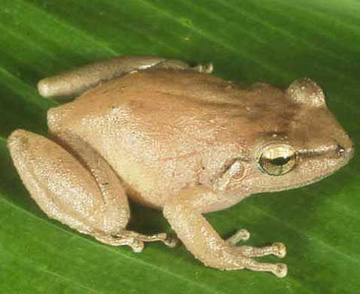
The National Wildlife Federation describes the common coquí as, "The Puerto Rican coqui (pronounced ko-kee) is a small arboreal frog that's brown, yellow, or green in color. Its scientific genus name--Eleutherodactylus--means "free toes" because, unlike many frogs, the coqui doesn't have webbed feet. These amphibians have special disks, or toe pads, on their feet that allow them to climb up vertical structures and cling to trees and leaves. Puerto Rican coquis are one to two inches (2.5 to 5 centimeters) long and weigh two to four ounces (57 to 113 grams). They are one of the largest frog species found in Puerto Rico."
According to the University of Hawai'i at Manoa College of Tropical Agriculture and Human Resources, the coqui frog was "accidentally introduced to Hawaii in about 1988."
The Big Island Invasive Species Committee says, "Coqui Frogs were accidentally introduced to the Big Island in the late 1980's on imported nursery plants. Beloved in their native Puerto Rico, coqui in Hawai‛i lack the natural predators that keep their population in balance, and their numbers quickly exceeded the population densities of their home range."
According to the National Library of Medicine, "E. coqui are considered among the 100 worst invasive species in the world (Simberloff and Rejmanek, 2019), bringing with them a host of biological and economic problems. The Hawaiian invasion is both the most extensive and the best studied. Hawaiian populations reach densities of up to 91,000 frogs/hectare (Beard et al., 2009), two to three times higher than estimates for native populations in Puerto Rico (Woolbright et al., 2006), and among the highest known for any amphibian worldwide."
The Hawai'i Invasive Species Council advises, "If you see this species on Maui, O'ahu, Kaua'i, Molokai, or Lanaʻi, call 643-PEST and/or visit 643pest.org to report it!"
The University of Hawaii at Manoa College of Tropical Agriculture and Human Resources says, "Coqui populations have exploded in the last 15 years from presumably a single infestation to over 200 on the Big Island alone. They are also present on Maui (40 or more infestations), O`ahu (5 sites) and most recently on Kaua'i (One site, subject of an eradication effort with citric acid in June 2003). Puerto Rico averages 40 frogs (reproductively mature adults, not including juveniles) per 20 x 20 m plot compared to > 200 in Big Island plots, primarily because of the lack of predators (owls, snakes, tarantulas, scorpions) in Hawai'i."
Like many things, it always comes down to perspective. As a native Coloradoan, the frogs are something to me that are unique wherever I find them. I don't mind their chirping at night and was first introduced to the coqui on the south of the Big Island where their distinctive croaks were louder than the heavy rain falling on a metal roof at night.
So I leave you this week asking you what your thoughts are on the little frog that has made such a huge impact on Hawai'i all because of some nursery plants. Let us know at rcollins@mauinews.com.