
Dwayne Johnson’s ‘Smashing Machine’ hits and misses
Trending
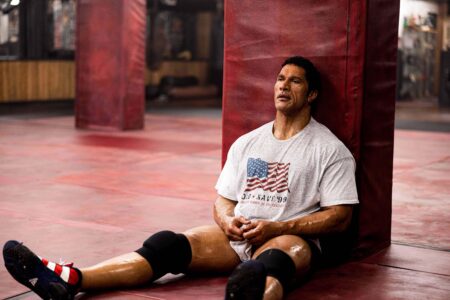
Benny Safdie's "The Smashing Machine" showcases Dwayne Johnson in a dramatic role, playing real life UFC fighter Mark Kerr and his remarkable but tortured career.
When we meet Kerr, he's an amateur wrestler and MMA fighter who flies to Japan to battle in matches that bring him victories in the ring but no long-term success. Back home in Arizona, Kerr lives with his girlfriend Dawn (played by Emily Blunt) and privately indulges in an opioid addiction. Despite how ferocious Kerr is in the ring, he comes across as a gentle, insecure soul in his daily life.
Johnson's commitment to playing a soft-spoken warrior, tender on the inside and an absolute beast in the ring, amounts to a nice career stretch. I hope he pursues more projects like this and less intended can't-miss crowd-pleasers like "Red One" and "Black Adam."
As impactful as Johnson's performance is here, I could never forget who is playing the role. Despite mimicking Kerr's distinct vocal patterns, some makeup prosthetics, different posture and committing to a wink-free performance, I still could always smell what The Rock was cooking.
Blunt has an uphill battle, taking on the cliched role of the fighter's girlfriend and doing what she can to make it real. Strange but true: Blunt and Johnson actually had far better chemistry in Disney's "Jungle Cruise" (2021).
The best performance comes from real-life MMA fighter Ryan Bader, who is natural and convincing playing Kerr's coach and best friend. A number of actual MMA personalities make up the supporting cast, and they're so good (with telltale cauliflower ears) that they all could easily become professional character actors.
The movie this reminded me of the most is Michael Mann's "Ali" (2001), which also had great performances and amazing scenes but, despite covering a lot of ground, still feels like there's a lot missing.
What does "The Smashing Machine" have to say about being an American MMA fighter in Japan? How does Kerr handle an uneasy household with his girlfriend? What about the topic of addiction? I have no idea, as the story is told chronologically, but the scenes feel disconnected, and there's no momentum nor enough screen time provided to any of the multiple subplots.
"The Iron Claw" (2023), about the Von Erich wrestling family, is another tough true story about real wrestling legends and a far more focused and effective film. I never thought a movie about ring legends starring Zac Efron would be better than one starring Johnson, but here we are.
While Safdie likely thought of the Mickey Rourke vehicle "The Wrestler" (2008) as a film that could be paired with this one, "The Wrestler" earns its melodrama by properly developing all its subplots, whereas "The Smashing Machine" does not.
The best scenes are when Johnson leans into Kerr's intriguing character contrasts, like a jewel of a scene early on where he talks to a lady in a doctor's waiting room with the same gusto and professionalism as he would a celebrity interview.
In the final moments, we see the real-life Kerr, who is engaging and fascinating, and closing title cards reveal jaw-dropping info about his domestic partnership. It proves that this would have been better as a documentary. In fact, one already exists. It's called "The Smashing Machine: The Life and Times of Extreme Fighter Mark Kerr." It was made in 2002 for HBO, directed by John Hyams (son of the great Peter Hyams) and covers much of the same ground.
I've been a fan of Johnson since I saw him in the WWF documentary "Beyond the Mat" (2000), where he came across as brash, determined and totally charismatic. Johnson's performance in this is the most vulnerable he's been on film since "Southland Tales" (2006); he has a hospital bed confession scene that is the most moving work I've ever seen from him.
With its tough scenes of endurance in and out of the ring, "The Smashing Machine" was clearly intended to be Johnson's "Raging Bull" (1980), but it winds up long-winded, ugly and feeling incomplete.
(2 out of 4 stars)
Barry Wurst II is the founder of the Hawaii Film Critics Society and teaches film classes at University of Hawai'i Maui College.