
Rodeo takes some precautions after spate of Strangles cases
Show must go on in Makawao: Organizers don’t expect horse disease to deter rodeo, parade
Despite the recent spread of a contagious horse disease on Maui, the Makawao Rodeo will continue as planned, though likely with fewer horses during the parade, according to leaders of the event.
“We’ve always had Strangles (disease) here. . . . It wasn’t an outbreak by any means. It sort of just blew through the island like wildfire,” said Roland Kehano, president of the Maui Roping Club. “We are requiring all the (rodeo) contestants to show a proof of vaccination. They have to show the certificate, which everyone has complied with. The rodeo will be the same, nothing’s changed.”
According to the Makawao Veterinary Clinic website, Strangles is the most common bacterial infection of horses worldwide. The disease typically infects the upper airway and lymph nodes of the head and neck of horses. Symptoms of the virus include reduced feed intake, nasal discharge, fever and mild lethargy. In most cases, after these mild signs, the lymph nodes can swell and form abscesses.
It may take three to 14 days for a horse to develop symptoms after exposure to the virus.
“It’s very contagious,” Dr. Timothy Patterson of Maui Equine Veterinary Services said Friday by phone. “It came from a horse that was shipped from the Mainland. All the rest of that person’s horses got it and then they shared a water trough with some others. That’s a common way, other than sneezing on each other or being close, that’s the most common way it can spread, is through water.”
Kehano said that the Maui Roping Club always keeps its animals vaccinated but is taking extra precaution for the 64th annual Makawao Rodeo after this particular case of the Strangles virus was reported.
While the rodeo requires a Strangles vaccine confirmation, parade Chairman Duane Hamamura said the parade does not, though it is highly recommended.
“We will be communicating with our horseback rider entries about the severity of the virus and that if they still want to participate, they will do so at their own risk,” Hamamura said. “I will do my best to keep the horse groups apart from each other as the virus is spread through their saliva.”
Hamamura added that he recently found out about the infection from a participant in this year’s Kamehameha Day Parade, which had a reduced number of horses walking down Front Street due to the Strangles disease scare.
“Our parade will more than likely be affected too on the horseback rider end,” he said. “We normally have anywhere from 50 to 70 horseback riders but I’m certain it will be much less this year.”
Even though the “the timing wasn’t good on this virus,” Hamamura said that they will still have the grand marshal, the rodeo queen and her court, the horse drill team and more.
Most horses diagnosed with Strangles recover within two to four weeks. However, in some cases, a horse may not build immunity against possible reinfection. Bacteria can essentially last up to a few years, which can result in death or continue to infect nearby horses.
Patterson added that Maui Equine Veterinary Services, which is associated with the Makawao Veterinary Clinic, has been treating a large influx of horses recently.
“If you are unable to present proof of vaccination from a veterinarian, you will be denied entry into (rodeo and polo) events and even on the grounds,” veterinarian Lizzie Immarino announced in a newsletter posted on the Makawao Veterinary Clinic website May 25. “We have many visitors coming from other islands and many of us ship our horses to other islands for events as well. I cannot stress the importance of properly vaccinating your horses and taking the proper precautions from spreading Strangles further, this includes people caring for horses that have been infected and traveling to other pastures, barns, horses, etc.”
The recommended protocol is a series of two intranasal vaccines, which can be done orally, two to three weeks apart for the initial vaccination and then every six months after that, Patterson said.
All vaccinations should be done by licensed veterinarians to ensure proper administration.
To learn more about Strangles and how to minimize risk, visit the Makawao Veterinary Clinic website at makawaovet.com.
The Makawao Rodeo is set to take place July 4-7 at Oskie Rice Arena, starting with qualifying runs at 9 a.m. July 4. The Bull Bash follows at 7 p.m. on July 5, with the parade at 9 a.m. on July 6. Rodeo competition starts at 3 p.m. on July 6 and at 12:30 p.m. on July 7. Special $25 all-weekend tickets are available at Minit Stop and Pukalani Superette.
* Dakota Grossman can be reached at dgrossman@mauinews.com.
-
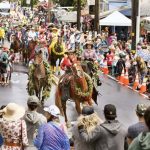
- The Makawao Rodeo Parade likely will have fewer horses when it starts July 6 and proceeds through Makawao town due to an outbreak of Strangles, according to a parade organizer. The pageantry from last year’s parade on July 7 is shown. — The Maui News / MATTHEW THAYER photo
-
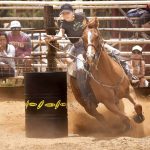
- Lea Bartlet rides in the Wahine Barrel Racing competition July 5 at last year’s Makawao Rodeo at Oskie Rice Arena. With an outbreak of Strangles on the island, contestants in this year’s rodeo from Thursday to July 7 will have to show proof of vaccination. — The Maui News / MATTHEW THAYER photo
Local News
Registration open for Ahupua‘a Stewards program on Maui
Hawaii Land Trust is accepting applications for the sixth year of its Ahupua‘a Stewards Leadership Program for ...
Maui housing market shows increased sales in March
Maui’s housing market saw increased sales activity in March, while the median prices of single-family homes and ...
Photo of the Day: Where are the bugs?
School to Pool program helps children on Maui learn to swim
Hale Kau Kau distributed more than 5,600 meals in March
Hawaiian Electric using drones as a wildfire safety tool
Hawaiian Electric is using drones for aerial inspections of its electrical infrastructure on Molokai. According ...