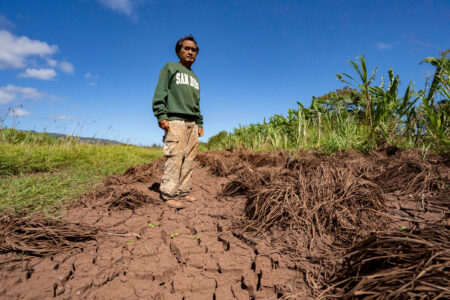
‘Imi Pono winners envision youth-driven, eco-friendly future
‘Imi Pono Challenge winners share ideas to improve Maui County
A student-produced lifestyle show, eco-friendly “home-learning desks” and hydroponic systems to feed the community are among the ideas that some of Maui County’s bright young minds hold for the future.
Maui High School junior Noelle Lo, Lanai sophomore Jacob Janikowski, Kihei Charter senior Michael de Haas and Iao Intermediate School’s Wyatt van der Lee and Xavier Katsuda all want to see the Valley Isle thrive through a community-driven and self-sustaining economy.
On June 1, the youth winners of the Maui County Council’s 2020 inaugural ‘Imi Pono Challenge shared their ideas and visions during a virtual Maui Chamber of Commerce event via Zoom.
“As you know, the COVID-19 pandemic caused major havoc in the community, including high unemployment, business closures and a dramatic rise of public health and safety issues,” Council Chairwoman Alice Lee said. “The pandemic may continue to negatively impact our economy for years to come. So last year we took a survey of Maui County residents of what the new normal should look like and a lot of people felt like we should diversify the economy and look for innovative solutions, create new directions and initiatives. … Who better than our youth to help us with ‘imi pono?”
The challenge, which drew 175 entries across Maui County and was chiseled down to 40 finalists and then five winners, asked intermediate and high school students to create new ideas to help improve the islands’ future.
YOUTH IN THE SPOTLIGHT
‘Imi pono, which means to “seek and strive for the right way,” was the basis of Lo’s contest-winning media project, in which she created a student-produced lifestyle show called “A Local Lens.”
“Besides being self-sufficient and utilizing local businesses more, my vision of Maui’s future is exposing our youth to things going on in the world,” Lo said. “There’s so much undiscovered talent and there’s not a lot of opportunities for them, especially in media or film.
“If we provide opportunities for the youth, they have a more easier time getting those jobs, and I feel with this type of project and more projects to come, I can provide more opportunities for the youth today,” she added.
The show features small local businesses and talent across the Valley Isle, offering low-cost advertising and hands-on experience for youth interested in the film and media industry.
“We’re looking just to offer them that community service, and students can put that on their resume and it’s something that you can actually be proud of,” Lo said. “I didn’t really realize how big of an impact this project could be until I won. I was quite shocked — I could provide more opportunities for the youth of my generation.”
Lo said that they would hire or use as interns students from seventh to 12th grade to work on different film teams, exposing them to real-life work experience. The show would stream on YouTube and be promoted on various social media outlets.
“Especially with a lifestyle show, there are so many aspects to consider. It’s not just doing film and photography, it’s writing the script, using social media, it’s contacting local businesses and being professional — there are so many things to learn from this,” she said. “I feel that throughout this process, I’ve grown so much as a person and as a young change-maker.”
Maui High has equipment for the crew to use, but Lo is asking the Maui County Council for $37,000 to $40,000 to cover startup costs, including new equipment, software, marketing, personal protective equipment, labor and more.
KEEPING KIDS ON TASK
Lanai High School sophomore Jacob Janikowski, who earned second place in the ‘Imi Pono Challenge’s high school division, used his experience as a student in the pandemic to inspire his idea. When youth across Maui County were forced to finish school remotely, Janikowski saw that children needed a stable and comfortable work environment to do their virtual homework.
“It puts some children at risk of not being educated properly, especially at the early ages,” he said. “For me, it was really hard to stay focused at home.”
Janikowski started to build low-cost “home-learning desks” out of recycled and donated materials, like leftover plywood and pallets from local vendors and organizations, for kids in kindergarten through third grade.
“Our solution was to make desks for a designated area to do schoolwork when at home. This will be an excellent social service as it promotes a healthy environment because these desks are made of almost 100 percent of recycled material,” the 16-year-old said. “It makes them extremely affordable and environmentally friendly while helping young children get an education, as well as help society and the economy for future generations.”
After the materials were broken down, the wood was cut and sanded into five prototypes, which had built-in shelves for school supplies. With the help of a few classmates, about two to three desks can be built in a day.
A total of six desks have been built so far, with three donated to children in the Lanai community, and another handful of desks ready to be assembled. Janikowski hopes to finish 25 desks.
“It was fun to be able to work with my friends and other community members and with my dad, who helped me a lot,” he said. “We’re trying to advertise and stuff right now to be able to donate more, so we’re hoping that, if anyone does need one, they’ll be able to contact us.”
HEALTH THROUGH HYDROPONICS
Kihei Charter senior Micheal de Haas focused his project on hydroponics, composting, education and building a “healthier Maui,” which earned him third place in the high school division.
Hydroponics is a way of farming without soil that produces less waste and uses fish as a key component. While the plants’ roots are submerged in the water system, tilapia or rainbow trout are added to provide more nutrients.
“By doing this, I hope to create a more sustainable economy, a healthier community, and a stronger ohana,” he said. “I’ve always grown up growing food and this is something that, hopefully, I’ll be able to share that passion, share that joy, with other people and really create a safe community that’s based around healthy food.”
Seeing a social disconnect between society and food and where it comes from, de Haas hopes to provide opportunities for students to learn about the process of growing food, farming and the importance of nutrition.
“When you ask a little kid where some lettuce comes from, they’re going to say it comes from a store, and while that’s not necessarily wrong, it shows their thought process — lettuce comes from a store, not from a farmer, a distributor, a local grower, or even from the earth,” he said. “I think that’s where we can make an impact.”
The 2019 U.S. obesity rate stands at 42.4 percent, he noted, which is directly affected by our lifestyles.
“Our bodies run on fuel, but when we decide to neglect the quality or just settle for something easy, it can affect us in a negative way,” he said. “If we make produce more available, maybe we can shift the way our minds think about food.”
Hoping to secure a government facility in the future, de Haas envisions growing local produce that he can provide to local schools, restaurants or farmers markets, as well as host educational field trips and offer hands-on workshops for youth.
“If we can touch their hearts and teach them now and show them what a healthy lifestyle can be, then that will have a butterfly effect on every aspect of their life,” he said. “It will have an effect on others around them.”
MORE FOOD, LESS SPACE
Iao Intermediate student Wyatt van der Lee, the first place finisher in the ‘Imi Pono Challenge’s middle school division, submitted a project on vertical greenhouse gardens and aquaponics with a vision for a self-reliant community.
“The most important thing I learned is how much time, resources, and money goes into building farms and how much work they have to do,” van der Lee said.
These stacked aquaponic gardens could grow food faster, use less water than conventional farming and would open job opportunities, he said. Because they take up less space, the vertical garden could be set up at local businesses, restaurants or farmers markets.
The soon-to-be seventh grader said he got the idea after visiting the aquaponic systems at the University of Hawaii Maui College and learning about the importance of growing local products, supporting local businesses and creating jobs for residents who may have lost theirs during the pandemic.
“Vertical greenhouses also don’t rely on tourism because they are using local people for jobs,” he said. “And, if we create vertical greenhouses, the plants are much stronger than if we did a farm because wind and bugs can’t get in the greenhouses.”
WATERING WITHOUT WASTE
Xavier Katsuda, a sixth grader at Iao who finished second in the middle school division, presented a project that would conserve water, help the environment and save money for residents for generations to come through a moisture-sensing sprinkler system.
“While Maui’s population continues to grow, our water supply does not,” Katsuda said. “We need to continue to water our agricultural, conserving water needed for drinking, and sustaining life on Maui, so water conservation is the key.”
The “Sprinkley Sprinklers” would sense how much moisture is already in the soil to determine how much water is necessary to disperse. The system would run on batteries that are attached to solar panels to make use of solar energy.
Customers could adjust the moisture settings depending on how wet the soil needs to be for whatever plants or crops they are growing, Katsuda said. Water conservation efforts would also provide education opportunities for keiki, who can be a “positive influence.”
“The ‘Imi Pono contest was challenging because it was difficult to think of an idea that would help our community while also helping our environment,” he said. “As a result of participating in the ‘Imi Pono Challenge my life has changed in that I now look around and see different ways in improving our community and not being so reliant in tourism, like helping local farmers and maybe give locals some kind of incentive to buy locally so that we’re not so reliant on food being shipped here.”
* Dakota Grossman can be reached at dgrossman@mauinews.com.
-

- Noelle Lo
-
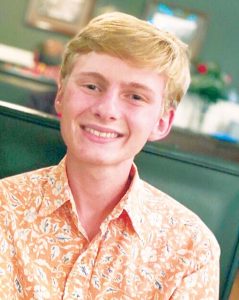
- Jacob Janikowski
-

- Michael de Haas
-
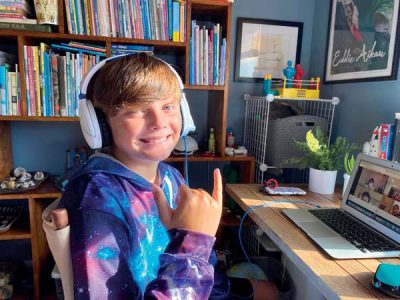
- Wyatt van der Lee
-

- Xavier Katsuda
Local News
County announces agreement with Maui Land & Pineapple to acquire West Maui water system, other assets
Affordable Housing Grants for Nonprofits
Hawaii nonprofits supporting families and residents in need of affordable housing are being encouraged to submit ...
Community Invited to Join the 2026 Maui Ride of Silence
Annual memorial ride honors lives lost on Maui’s roads and raises awareness for safer streets for all. The ...
Presentation at Kihei-Wailea Rotary, Wednesday, May 20
The Arts Belong Here: Our Youth and Maui Nui Performing Arts Future. Mr. Barry Kawakami will share how a new ...
African Penguin Chick Hatches at Hyatt Regency Maui
Hyatt Regency Maui Resort and Spa, announces the hatching of its first African Penguin (Spheniscus demersus) chick ...