
Maui veteran of Nevada nuclear test site fears radiation exposure
Las Vegas resident leading the charge to find and compensate impacted veterans

U.S. Air Force veteran David Crete (far left) is shown in this photo more than three decades ago. He was a member of the 4461st Security Police Squadron based at the highly classified Tonopah Test Range in remote Nevada where he and others say they were exposed to radiation from highly toxic chemicals. Photos courtesy David Crete

Hada
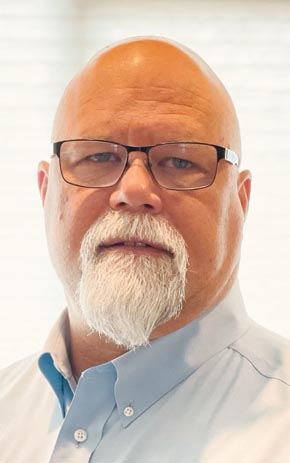
Crete
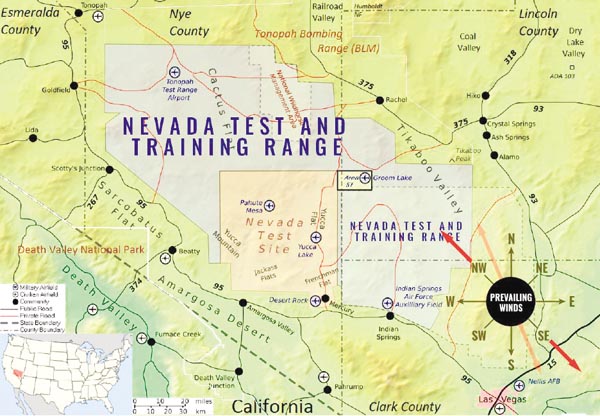
A map shows the location of the Tonopah Test Range the Nevada desert northwest of Las Vegas. Photos courtesy David Crete
U.S. Air Force veteran David Crete (far left) is shown in this photo more than three decades ago. He was a member of the 4461st Security Police Squadron based at the highly classified Tonopah Test Range in remote Nevada where he and others say they were exposed to radiation from highly toxic chemicals. Photos courtesy David Crete
Hada
Crete
A map shows the location of the Tonopah Test Range the Nevada desert northwest of Las Vegas. Photos courtesy David Crete
Trending
Like his Air Force security police squadron colleagues, retired Maui Police Detective Mark Hada has suffered from lipomas, has susceptibility to bronchial issues and other health problems that prevent him from leaving the house.
"The health conditions I have, which could potentially be linked to radiation exposure, started approximately 30 years back and had gotten progressively worse as time went on," said Hada, who served with the 4461st Security Police Squadron at the highly classified Tonopah Test Range in remote Nevada decades ago. "The number of people with lymphomas who worked there was too coincidental for it to have been caused by something else. And this is something that no one else in my family has had or has."
Hada's other colleagues have suffered from various cancers, cardiovascular disease, pulmonary disease and other health issues.
While civilian employees at the test range have been compensated and given health care, folks such as the 53-year-old Hada have not.
But Las Vegas resident and fellow squadron member David Crete is hoping to change all of that.
Last month Crete got U.S. Rep. Mark Amodei of Nevada to begin drafting a bill for compensation for veterans and their families who have suffered from exposure to plutonium and other toxic chemicals, unbeknownst to them.
Crete said on Thursday that the bill is still in draft form.
Hada said he has contacted Hawaii's congressional delegation and is hopeful that they, too, will support Amodei's legislation.
The bill aims to fill the void left by Executive Order 13179, signed by President Bill Clinton in 2000, which compensated civilians and their survivors along with Department of Energy employees, but not Department of Defense personnel, including the Air Force units that served at Nevada Test and Training Range and Tonopah Test Range and their families, according to Crete.
The order in part says: "While the Nation can never fully repay these workers or their families, they deserve recognition and compensation for their sacrifices. Since the Administration's historic announcement in July 1999 that it intended to compensate DOE nuclear weapons workers who suffered occupational illnesses as a result of exposure to the unique hazards in building the Nation's nuclear defense, it has been the policy of this Administration to support fair and timely compensation for these workers and their survivors."
In an effort to establish evidence for the bill to compensate those who were left out, Crete has conducted much research into the Tonopah Test Range where the Department of Energy and Sandia National Laboratories conducted nuclear testing decades before folks like he and Hada arrived to provide security for the U.S.'s top secret F-117A stealth aircraft.
He said the only hazards they were notified of were ice during the winters and the wild horses that they could encounter, but they were given no notice of soil and water being contaminated.
Crete was there from 1983 to 1987, and Hada was there from 1988 to 1990.
There were three other Air Force units and additional Department of Defense personnel who were also stationed at the test range, according to Crete.
He also worries about impacts to services members' families -- wives have reportedly suffered miscarriages and children have been born with birth defects.
From their Facebook groups and other connections, Crete said he is in touch with around 1,500 who were exposed. He does not know how many may have been exposed and already died.
In Hawaii, Hada said he only knew of three who had served there, and he wants to locate more.
Those who may have been affected may contact Crete at dave@theinvisibleenemy.org.
Overall, it's hard to tell who may be the sickest or affected the most.
"I used to figure guys like Mark and I would be the sickest because we were the ones rolling out in the dirt. There were other things that people were exposed to that the mechanics and the pilots are just as sick as we are or worse," Crete said.
Crete, who is 58 years old, also continues to suffer from lipomas all over his body, including one the size of a grapefruit that he got removed from his back. Lipomas are slow-growing, fatty tumors just below the skin, according to the Mayo Clinic. Crete is also susceptible to bronchitis and has scarring in his lungs.
Both Crete and Hada recalled wearing dark green or brown T-shirts that would turn purple when they came in from duty, which they now believe was from radiation.
"A T-shirt doesn't turn purple because you're sweaty," Crete said. "We used to always joke about that, but we always worried."
Crete also points to an environmental assessment done by the U.S. Energy Research & Development Administration in 1975 that looked at options on what to do, if anything, with Tonopah in Nye County, Nev., which is located in the desert about 160 miles northwest of Las Vegas, according to the Department of Energy and Sandia National Laboratories.
It concluded that the operation of the test range should be permitted to continue.
"These costs and these benefits imply that as long as the nation chooses to maintain an up-to-date nuclear weapon stockpile, some facility such as the Tonopah Test Range must continue to exist," the report said.
The range is still in operation and is described as "the testing range of choice for all national security missions," according to Sandia National Laboratories' website.
Because Crete and Hada were protecting top secret equipment, their families didn't quite know what they did and government has obscured data of their time there.
This muddies the process for veterans who may seek out claims through Veterans' Affairs, as they cannot prove they were stationed there.
"Attempts to be tested through my private physicians using private insurance have so far been unsuccessful and trying to have the VA assist has been a nightmare," Hada said. "It seems like it literally takes an act of Congress to even be considered in testing for something like this."
While Hada and Crete wait for the bill to be drafted, Crete said, "The biggest thing is just for people to lobby (for the bill) and just get to understand what happened."
"The government didn't have the right to decide for Mark that they were going to make Mark sick," Crete added. "You join the military, you go off to war, you understand there are certain risks that you are taking. You are not in war, you expect that there's a certain amount of protection that the government is going to provide to you, or they are going to tell you what you are doing."
Hada applauds and is grateful for Crete and his efforts.
"Dave had taken something which we all may not have been too privy about and has started trying to do what is right for everyone," Hada said. "His efforts are not malicious nor are they vindictive. His main goals are to assist all of us who were negatively impacted."
* Melissa Tanji can be reached at mtanji@mauinews.com.