
Acclaimed Kumu Hula Kamaka Kukona presents ‘Lei Kaulana’ at the MACC
Trending
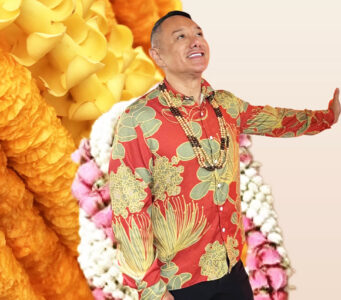
Multiple Nā Hōkū Hanohano Award-winning Kumu Hula Kamaka Kukona will present the special production "Lei Kaulana" with Hālau o ka Hanu Lehua on May 31 at the Maui Arts & Cultural Center, featuring a cast of more than 200 performers.
"It should be a really nice, uplifting afternoon of aloha," said Kukona. "Lots of aloha and lots of leis going around. I've been doing this for 22 years now, so I feel like I have arrived."
The Maui-born kumu said the show will also pay tribute to his senior students. "This year I have the most seniors graduating from high school that I've ever had. Six of them started around four and five years old, and now they're 18 and going off to college. Many students have come through, and they don't necessarily make it all the way, but these girls lasted all these years. So it's a celebration for them and their parents, as well as the musical groups that have ties with our hālau."
Guests include multi Nā Hōkū winner Kaumakaiwa Kanakaʻole from the Big Island, multi Nā Hōkū winner Kamalei Kawa'a, Kumu Hula Jaydon Isobe, and the Maui band Launa'ole. "Koakāne Matos, who's in that band is also a kumu from our hālau that recently graduated as a kumu hula too," he said.
With a lifelong passion for hula, "I've been doing hula since I was in my mom's tummy," he said, 'but I've been dancing since I was four and I'm going to be 50 next year."
Moving to Oahu to attend Kamehameha Schools, he continued his education at the University of Hawaii at Mānoa and studied hula with Kumu Mae Kamāmalu Klein on Oahu, beginning the 'uniki (graduation) process at 19.
It was an invitation to join the pioneering "'Ulalena" show at Lahaina's Maui Theater that drew him back home.
"I lived on Oahu for 17 years," Kukona explained. "Four years into ''Ulalena,' their original cast started breaking down and they needed replacements. I ended up auditioning, and they said, 'Would you be able to move to Maui like in two weeks?' I was like, well, my mom's going to be so happy, but I don't know if I can just pick up my whole life and leave in two weeks. But the rest is history."
Moving back to Maui in 2006, "I only lasted two years," he said. "It was really taxing on the body. When the show started slowing down and they cut nights, that was my cue to exit stage left."
In 2013, he released his debut album "Hanu 'A'ala," at a time when he didn't view himself as a talented singer. "I didn't particularly think that I had any special voice, anything special," he recalled. "I could hold a note, but I didn't think that it was anything out of the ordinary.'
He was initially inspired to make a recording to help his Japanese students. "When I started teaching hula in Japan, we learned that the dancers really loved Hawaiian music," he said. "So if I'm teaching them my songs, if I were to actually record, they could have it as a tool to keep on practicing. That was really the push for that first album."
Despite his trepidation, "Hanu 'A'ala," won him his first Nā Hōkū Hanohano Award for Male Vocalist of the Year as well as Most Promising Artist, and even garnered a Grammy nomination.
In 2014, he was the only Hawaii artist to be nominated in the Best Regional Roots category. "I didn't know what that was all about until they were calling me," he recalled. "That was another shocker surprise of my life."
Growing up, he was a big fan of the legendary Brothers Cazimero. "They were a big thing in our household," he said. "My mom was a dancer with Robert Cazimero in the '70s. Cecilio and Kapono was another one that my mom and dad always played."
A life-changing influence came when Maui Kumu Hula Keali'i Reichel released his groundbreaking debut album "Kawaipunahele" in 1994.
"What really was the change of the times for me in high school was when Keali'i Reichel made the debut," he explained. "It seems like our whole world just turned a corner because it was a traditional sound, but it was a very modern feel. When he made his massive entrance into the world of music, that kind of shaped the way us younger generation artists were inspired to think and to feel and to work. It was so inspiring. We just wanted to do that and be like him."
Kukona's recording success continued with "'Ala Anuhea," which won his second Male Vocalist of the Year Nā Hōkū award.
Releasing four albums so far, including his 'latest "Kahenewai'olu," he explained, "I am very traditional, but I am very inspired by contemporary Hawaiian music. I feel that when you are rooted in tradition, we know how to navigate through other things carefully so as not to be disrespectful of things that were very meaningful to our kūpuna and to an earlier time."
A respected kumu, he's deeply appreciative of helping preserve his culture. "You only realize the magnitude of your work after several decades," he noted. "It's been two for me, and now that I have students who are teaching language, teaching culture at the university, and also teaching hula as well, it is fulfilling to know that I did my little part in this whole bigger scheme of things in Hawaiian culture."
Asked about his greatest joy as a teacher, he said it is, "seeing a child come through the doors and really take to heart all the valuable lessons and grow up in hula, and to see them flourish at a later age, and now I let them go. So I feel like I did my job when they lasted this long, and then they come back after they graduate from college one day, and then they continue their hula studies as adults later on."
"Lei Kaulana" with Hālau o ka Hanu Lehua is presented at 2 p.m. on May 31 at the Maui Arts & Cultural Center.