
Protest rises over Kalaupapa tours
Trending
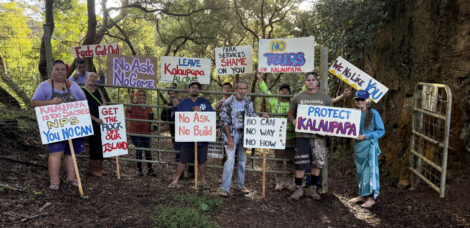
Some Molokai residents are protesting the National Park Service's launch of ranger-led public hiking tours at Kalaupapa National Historical Park, saying the agency did not consult the community about the potential effects on the island.
The tours began Thursday and are the first public tours offered directly by the National Park Service at Kalaupapa. Previous tours were operated by Kalaupapa Saints Tours, which ended operations after the longtime resident who ran those tours died in May at age 91.
The protesters include Maui County Council Member Keani Rawlins-Fernandez, who holds the council's Molokai residency seat. Rawlins-Fernandez said residents should have been consulted before the NPS tours began and should know how expanded visitation could affect the island.
"If they had consulted with us, we could have had conversations about how something like this could work and how we could mitigate the impact to the overall community," she said. "The largest concern is no consultation beforehand. What kind of precedent does that set for when they scale up?"
According to the National Park Service, the ranger-led tours are offered Thursdays and Saturdays and begin at the trailhead above the Kalaupapa Peninsula. Participants hike about 3 miles each way on the Kalaupapa Pali Trail, descending and climbing about 1,700 feet.
The all-day tour can include up to 8 miles of hiking in hot and humid conditions. Participants must be at least 16 years old, reservations must be made at least 24 hours in advance and tickets cost $20, plus a $1 nonrefundable reservation fee.
The National Park Service said the tours are currently the only way visitors can access the park and that visitation remains capped at 100 people per day.
"We are excited to offer visitors an opportunity to learn about and be inspired by Kalaupapa," park Superintendent Nancy Holman said when the tours were announced. "These tours will also provide valuable insights that will help the NPS and our partners shape future visitor experiences."
Holman was unavailable for comment Friday.
Kalaupapa was the site where thousands of people with Hansen's disease were forcibly isolated beginning in the 19th century. Father Damien arrived in 1873 to care for residents of the settlement and was canonized as St. Damien of Molokai by Pope Benedict XVI in 2009.
Land, marine areas and improvements within the park's authorized boundary are not entirely federally owned. They are managed through cooperative agreements involving the National Park Service and other parties, along with a lease involving the state Department of Hawaiian Home Lands, according to a state report.
Molokai remains largely rural, with no major resorts and a population of about 7,400 that has changed little over the past quarter-century.
Rawlins-Fernandez said the island also has limited flights on small passenger aircraft, many of which are used by residents commuting for work.
"So they're competing with our workforce for limited seats on the plane," she said.
Rawlins-Fernandez said it appears the National Park Service is testing the water to see how much it can get away with.
"The answer is nothing," she said. "You can't get away from nothing."
Walter Ritte, one of the protest organizers, said residents object to the National Park Service inviting additional visitors to Molokai without first consulting the community.
"We're not okay with the National Park inviting everybody in the world to come to Molokai and then go down to Kalaupapa without input from the community," Ritte said.
Ritte said protesters formed a blockade Thursday to explain their objections before later allowing tour participants to pass. Another protest and blockade is planned for Saturday.
Ritte previously helped lead opposition to cruise ships stopping on Molokai in the early 2000s. Large protests and water blockades followed, with residents citing potential reef damage and effects on the island's rural lifestyle.
Ritte said protesters at the time discouraged cruise visitors by standing along roads and yelling at them.
"Nobody likes to pay to get yelled at," Ritte said. "Tourism is very fragile."
He said protesters are not currently yelling at visitors participating in the Kalaupapa tours.
"We can do that also all over again," he said.
For more information about Kalaupapa National Historical Park, visit nps.gov/kala.