
Protecting place: How invasive species modify ecosystems
Kia‘i Moku
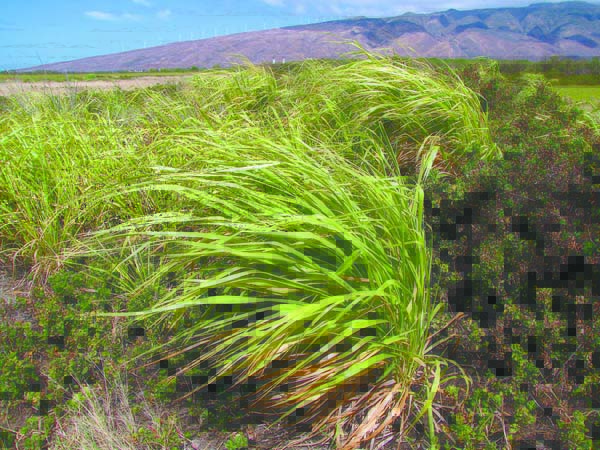
Guinea grass and other invasive grasses alter soil moisture and an accumulation of dead, dry leaves that don’t decompose create a fire-prone landscape. — Photo courtesy Maui Invasive Species Committee
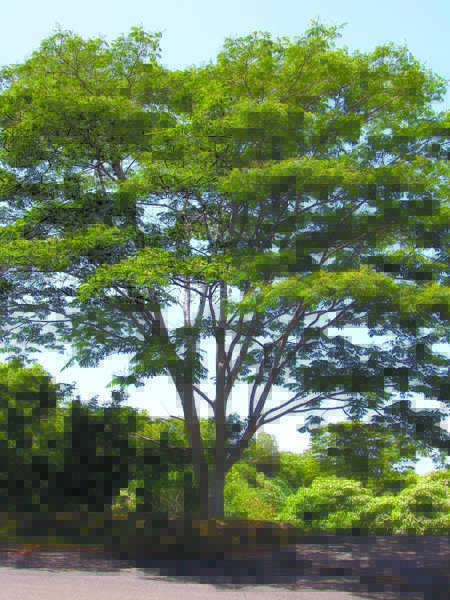
Invasive species like albizia do more than just displace native species — they can disrupt the relationships throughout the ecosystem. Albizia increases soil nitrogen, for example. — Photo courtesy Maui Invasive Species Committee
Guinea grass and other invasive grasses alter soil moisture and an accumulation of dead, dry leaves that don’t decompose create a fire-prone landscape. — Photo courtesy Maui Invasive Species Committee
Invasive species like albizia do more than just displace native species — they can disrupt the relationships throughout the ecosystem. Albizia increases soil nitrogen, for example. — Photo courtesy Maui Invasive Species Committee
Trending
We're surrounded by relationships -- with family members and friends, familiar faces and acquaintances. People we know at work, school and church. We shape and are shaped by all the interactions in our lives, including our surroundings. Each of us is part of an ecosystem of relationships -- one that has grown and evolved since the first breath we took.
The term "ecosystem" was coined in 1935 by British scientist Sir Arthur Tansley, who urged fellow ecologists to consider the "whole system" and not just the components. He promoted understanding the interactions between plants and animals, the minerals in the soil, the climate and everything connected to them. Ecologists studying big-picture interactions began using the term as a framework, looking at how energy flows through the entire system, from the producers that transform the sun's energy to food, through all the layers of consumers and decomposers.
Tansley's terminology stuck, but the concept was hardly new. For thousands of years, humans have observed and studied relationships and interactions in their surroundings. The Kumulipo, the Hawaiian creation chant, emphasizes the interconnectedness of the earth, sky, ocean, plants, animals and humans. So do ancestral narratives from cultures worldwide. Like our own origin stories, there is a beginning -- a first arrival, from which all relationships flow. In Hawaii, the connections were forged over the millennia, with new species successfully establishing once every few thousand years -- finding or creating new places within the larger fabric. The pace of arrivals exploded over the last several hundred years, increasing the possibility of harm to the system. When a plant, animal or micro-organism is invasive, it can have a disruptive and destructive impact on the ecosystem.
Hawaiian soils are naturally low in nitrogen. The ability to thrive in nutrient-poor soils helped ancestral plants colonize the islands, slowly creating forests from bare lava. The invasive albizia tree increases nitrogen in the soil, modifying the ecosystem in a way that better suits nonnative plants. Unfortunately, the excess nitrogen stunts the roots of some native plants, literally throwing them off balance. Invasive plants disrupt other relationships, with impacts cascading throughout the ecosystem.
Invasive grasses are ecosystem modifiers. Soil moisture is affected by these invasive grasses, as well as the composition of microbes and nutrients that affect the growth of other plants. Often drought-tolerant, the grasses can grow quickly over a few months. Leaves die back, but don't decompose, and the biomass can accumulate over years. In Hawaii, invasive grasses reduce the growth of native plants and shrubs, shifting the plant community towards more grasses. A buildup of dry, dead leaves creates a mass of fuels ready to burn.
Native plants that survive a fire in Hawaii often don't recover because they are not adapted to a fire cycle. Fire does not play a significant ecological role in Hawaii because there were few historical sources of ignition (other than lava flows). In contrast, many of the nonnative grasses here were shaped by a long history of lightning-ignited fires and disturbance. They quickly recolonize a burn scar with plentiful seeds or resprout from deep underground roots. Grasses have transformed an ecosystem where fire is rare into a fire-prone one, waiting for a spark.
These altered ecosystems don't return to native plants, even after years without a fire. Researchers who examined sites on Hawaii island found that an area that had burned twice was already beyond the threshold for natural recovery, even after 20 years of fire suppression. Plants in these historical burn sites included grasses and invasive woody shrubs.
Like the individual relationships we forge over our time on the planet, most are positive -- or at worst annoying. Most nonnative plants are desirable for their food or beauty, and either play well with the rest of the clan or can be kept in check with regular maintenance. But some are simply incompatible. Native plants and animals can't uproot and move elsewhere. Without vigilance, more disrupters will arrive, establish and forever alter the ecosystems they and we call home.
Sir Arthur Tansley and his peers don't always include people as a part of the ecosystem. The Kumulipo emphasizes the place of kanaka in the ecosystem. People are not separate from the environment; we are of it. Our relationships are as interwoven with place and plant and animal as they are with each other.
* Lissa Strohecker is the public relations and education specialist for the Maui Invasive Species Committee. She holds a biological sciences degree from Montana State University. Kia'i Moku, "Guarding the Island," is prepared by the Maui Invasive Species Committee to provide information on protecting the island from invasive plants and animals that can threaten the island's environment, economy and quality of life.