
Malama aina starting with your yard; landscape with native plants
Kia‘i Moku
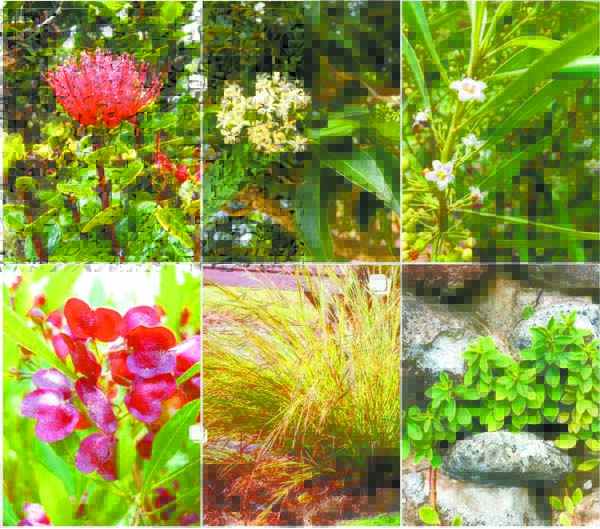
Native plants are uniquely suited for growing in Hawaii. Growing them can help you save water as well as support other species. Clockwise from top left: Ohia, alahaee, naio, alaala wai nui, pili, aalii. — Photos courtesy of Maui Nui Botanical Garden
April is native Hawaiian Plant Month, but on Maui, the bulk of our native plants are in remote forests, hard to see on a regular basis. By incorporating natives into your landscaping, you’ll be adding a distinctively Hawaiian aspect to your home. No matter where you live, there are plants exceptionally suited for your yard, shaped by the climate and conditions of life in the islands. And by growing them, you’re not only adding notable plants to your yard, you’re also supporting native animals, like yellow-faced bees, moths, and the Kamehameha butterfly.
Tamara Sherrill, Executive Director of the Maui Nui Botanical Garden, has spent her career advocating for native plants in landscaping. “Everyone who grows plants should make room for native Hawaiian plants. The right native plant in the right place conserves precious water resources, increases materials available for cultural uses, and honors the unique natural history of Maui County,” she says.
Not sure where to start? Below is a list of plants Sherrill recommends. These species tend to do well in a wide range of elevations, rainfall, and soil types. No yard? No problem. The list includes recommendations for your lanai or indoors.
Trees:
¯ Ohia: As both a pioneer–one of the first plants to grow on fresh lava–and a keystone species that supports other plants and insects and provides nectar for native birds, ohia are a great place to start your native plant journey or add to your collection. Gardeners can find varieties adapted to growing just about anywhere on Maui.
¯ Alahee: With glossy, dark green leaves and showy, white and fragrant flowers, this small tree can be used as a replacement for mock orange. Because it grows in such a distinctive shape, it’s sometimes kept in a pot and used as a Christmas tree.
¯ Naio: Delicate white flowers decorate this hardy tree, which grows 6-to-8 feet a year and can reach 30 feet.
Small trees/shrubs:
¯ Aalii: One of the first species planted at native forest restoration sites, this shrub is hardy and drought-tolerant. Its leaf litter helps cool the soil and retain moisture for other plants, but these plants also do well in wet areas.
¯ Naupaka: A common, well-known plant along our beach shorelines, naupaka makes a great hedge, suited for lower elevations. Succulent leaves help it retain water and withstand gusty winds.
¯ Ulei: Feathery leaves and fragrant flowers are ulei’s trademark. Ulei is in the rose family and can be pruned into a low hedge.
¯ Mamaki: A favorite for herbal tea, mamaki is also the host plant for the Kamehameha butterfly.
¯ Other small trees or shrubs to consider: Kokio, kokia
Ground covers:
¯ Kupukupu: In clay soils, kupukupu ferns grow thick and dense, creating lush ground cover.
¯ Pili grass: This native grass is a distinctive ornamental and can be cut and used as a green mulch. Use caution if you have pets; the seeds can be burrow into their skin.
Plants for indoors or on a lanai:
¯ Alaala wai nui: Depending on the species, you can find large leaves or tiny leaves of this native pepper plant related to black pepper, normally found growing in the rainforest, but happy as a houseplant.
¯ Ihi: Do you have a hot, dry lanai? Try growing ihi. The succulent leaves and yellow flowers of this drought-tolerant coastal plant add color to a basket or in between rocks.
Where can you find native plants? Maui Nui Botanical Gardens gives away native plants on the first Friday of each month. The garden showcases example of native plants in landscaping and has information on how and where to grow them. Native Nursery is a wholesale grower in Kula; you can find their plants in retail locations or visit by appointment. Find examples of native plants on the borders of Haiku School, at Kealia Pond National Wildlife Refuge, and along the sea walk in Wailea.
Landscaping with native species, as with any landscaping, requires effort to keep invasive species from taking over. But by using native plants in your landscaping, you know you won’t be introducing an invasive plant–you’ll be restoring a piece of Hawaii.
* Lissa Strohecker is the public relations and education specialist for the Maui Invasive Species Committee. She holds a biological sciences degree from Montana State University. Kia’i Moku, “Guarding the Island,” is prepared by the Maui Invasive Species Committee to provide information on protecting the island from invasive plants and animals that can threaten the island’s environment, economy, and quality of life.
-
- Native plants are uniquely suited for growing in Hawaii. Growing them can help you save water as well as support other species. Clockwise from top left: Ohia, alahaee, naio, alaala wai nui, pili, aalii. — Photos courtesy of Maui Nui Botanical Garden
Local News
Kula man dies after crash on Honda Ruckus
A 55-year-old Kula man died Saturday from injuries he sustained in a June 1 motorcycle crash in Kahului, according ...
Honolulu man sentenced for fraudulent FEMA wildfire claims
A Honolulu man has been sentenced to two years in federal prison for submitting fraudulent FEMA disaster assistance ...
County offices to close for King Kamehameha I Day
Maui County offices, facilities and services will be closed or operate on modified schedules June 11 in observance ...
Maui County Council approves $1.6B budget for fiscal year 2027
The Maui County Council has approved a $1.6 billion budget for the 2027 fiscal year that includes funding for ...
One week remains to apply for FEMA, SBA disaster assistance
Condo sales, median price both down in May
The Realtors Association of Maui is reporting that condominium sales and median prices both declined in May ...