
Hawaii’s black coral: Protected, studied and still revealing its secrets
Trending
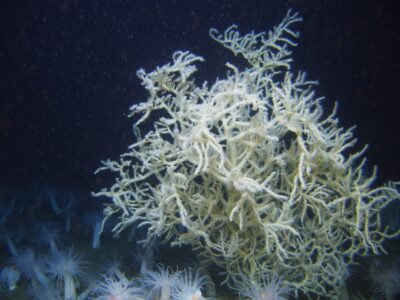
It's an organic gem like a pearl. But instead of residing in a shell, this Hawaii gem grows slowly like a miniature tree deep in the ocean.
Black coral, the state of Hawaii's official gemstone, does not rely on sunlight like the shallow-water reef-building white corals that use photosynthesis to obtain energy do. Black coral has also been used by Hawaiians as a traditional medicine.
The skeletal-accreting organism thrives in deep, dark water, feeding on zooplankton and producing an ebony luster.
Its use in jewelry had its beginnings as an industry in Hawaii in 1958 off the shores of Lahaina by two divers Jack Ackerman and Larry Windley, who founded Maui Divers Hawaii.
Maui Divers executive Cole Slater said black coral has an important presence in the company's line of jewelry and is a meaningful reminder of Maui Divers' ties to Hawaii. He emphasized that the harvesting of it in the ocean is done sparingly, with the goal of sustainability for future generations.
With lines of jewelry connected to Hawaii such as its Ohia collection, Maui Divers has 14 stores statewide and two on Maui.
"We don't drag the bottom of the reef and cut everything off," Slater said. "We've always had harvest limits. We're proud of that."
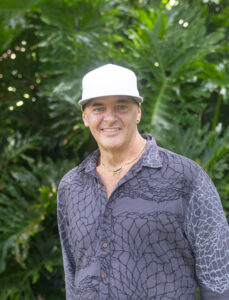
Cole Slater serves as chief executive officer of Maui Divers. The business started the black coral jewelry industry in Hawaii. Photo courtesy Maui Divers
Slater said his father, Cliff, who also managed the company, worked with oceanographer Richard Grigg in conducting studies of black coral and identifying various species and establishing limits in harvesting.
Slater said the company harvests two species of black coral -- Antipathes grigii, which is named after Grigg, and Antipathes grandis, which is found about 150 to 200 feet below the surface.
Another control from over-harvesting black coral is the depth at which it's usually found -- in excess of 120 feet. It's deep enough to require experienced divers who have to rest before a dive and take time ascending to the surface to avoid potentially fatal complications.
Although there have been no known incidents in the last couple of decades, black coral divers have died in waters off Lahaina.
Most recently, the use of remote submarine technology has led to discoveries of new species of black coral, including Leiopathes glaberrima off the coast of Hawaii.
Scientists estimated the new species' age by radio carbon dating to be 4,265 years old and regarded it as among the longest living organisms on the planet.
The new long living species is found in deep waters, typically 1,000 to 3,000 feet below the surface.
Recently, there has been growing interest in deep-sea mining at depths of more than 200 meters to gather mineral deposits such as cobalt, nickel, copper and manganese between Hawaii and Mexico.
A bill banning deep sea mining in Hawaii waters was passed on July 9, 2024, to protect the state's marine life, fishing industry and native Hawaiian rights.
Scientists have expressed worries about seabed mining upsetting the biodiversity of deep sea organisms and the potential answers it might have in medicinal cures.
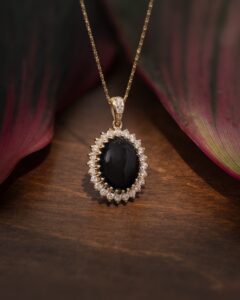
The state of Hawaii's official gem, black coral, has a unique luster that has made it a popular item in jewelry stores. A couple of species are used in creating the gemstones, and the industry is kept sustainable through limited harvests. Photo courtesy Maui Divers
Some recent scientific studies have shown the black corals actually produce bioactive compounds that could potentially be used to fight diseases.
In fact, remedies made out of black coral have been used in many cultures throughout China, Greece and Hawaii for centuries.
Ancient Hawaiians used black coral for various medicinal purposes, including a mixture of black coral power and other ingredients to treat mouth sores and lung disease.
Scientist Daniel Wagner said there are some 250 known species of black coral, more than 20 in Hawaii waters.
"There are probably many more that haven't been identified that reside at a depth of more than 250 meters, and that includes other organisms as well," said Wagner, chief scientist for Ocean Exploration Trust. "There's an unknown reservoir there."
In one study available through the National Institute of Health, mice in a laboratory showed decreased inflammation in the lungs after being exposed to atomized black coral extract and cigarette smoke.
"These results suggest BCE has antioxidant and anti-inflammatory activity. ...BCE may protect against lung injury in smokers," according to the study published in Experimental Lung Research in 2011.