
‘Lāhainā Rising’ to screen at UN
Trending
The award-winning documentary "Lāhainā Rising" is heading to the United Nations.
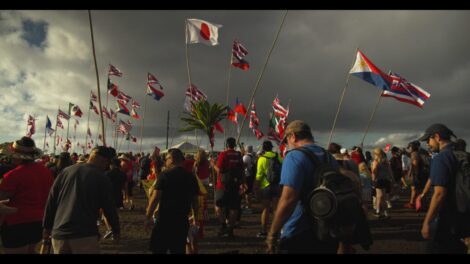
Directed by Matty Schweitzer, the film chronicles the devastation and resilience surrounding the August 2023 wildfire that tore through Lahaina. The documentary will screen during the 25th session of the United Nations Permanent Forum on Indigenous Issues in New York on April 24.
Representing over 370 million people from 70 countries, the UNPFII coordinates matters relating to the concerns and rights of the world's Indigenous populations.
Nine members of a Hawaii delegation featured in the film plan to deliver intervention statements at the U.N., drawing connections between Lahaina and Indigenous communities worldwide, aligned with the 2026 UNPFII theme "Ensuring Indigenous Peoples' health, including in the context of conflict."
"This is such an incredible opportunity," said De Andre Makakoa, a filmmaker and videographer who became a prominent figure in the Lahaina Strong movement. "I'm blessed that through the creation of this film and the skills and resources and platform that I built that I've been given this opportunity. I hope that I do right by my people and the issues that really need highlighting."
Among the U.N. delegation is community leader and frontline environmental policy advocate Paele Kiakona, alongside the film's executive producer, acclaimed Native Hawaiian actor Moses Goods, who played Moku, an advisor to future King Kamehameha I in "Chief of War."
"This is about bringing the truth of Lahaina to the world stage, carrying the voices of our people into spaces where decisions are made about our future," said Kiakona. "We stand in memory of those lost in the fires and in protection of what remains."
International human rights attorney Keely Badger, founder of 360 MEDIA, helped arrange the U.N. screening. She actively represents the rights of victims through international delegations.
"I'm privileged to be working with the 'Lāhainā Rising' documentary team for the last year," Badger said. "I was very interested in the international human rights legal perspective on what happened during and after the fires in Lahaina, the recovery effort, and of course, blown away by the resiliency of the Lahaina and Maui community. (We're) also looking at ways that international law and international forums like the United Nations could support raising awareness about resiliency in the aftermath of tragedy."

The team that made the "Lāhainā Rising" documentary include (from left) Keely Badger, Phil Schlieder, Blake Ramelb, Matty Schweitzer, De Andre Makakoa, Paele Kiakona and Amber Bobin. They will all travel to New York for a screening April 24 at the United Nations Permanent Forum on Indigenous Issues. Courtesy photo
Through the screening, formal interventions at the U.N. and meetings, the delegation will elevate urgent issues at the heart of the film, including the right to health in the aftermath of the 2023 Maui wildfires, the protection of water and land stewardship, and the broader importance of Indigenous sovereignty, cultural preservation and human rights.
Born and raised on Maui, Makakoa's family has been in Lahaina for over 15 generations. Having lost his home in the fire, he played a pivotal role in documenting the recovery process.
"It was an honor to be able to utilize the skills and resources that I had to be able to capture the story of my community and put it out there," said Makakoa. "My home burned down and the homes of all my close family members, my sister and my grandma."
Makakoa helped the "Lāhainā Rising" team tie the fight for water rights, housing and the history of Lahaina into the film. The documentary traces how centuries of environmental degradation, rooted in plantation-era policies and modern tourism-driven exploitation, set the stage for catastrophe. It reveals how these systemic injustices created a fragile, unsustainable landscape and left Native Hawaiian communities vulnerable and underserved.
In the absence of adequate government support, residents organized relief efforts, cared for one another and began the long road to healing and rebuilding.
"Native Hawaiian peoples had methods of managing land and living with the resources that were available to us in such a way that it allowed us to thrive sustainably and not destructively," Makakoa explained. "That was the perspective that I wanted to tell in the film: that these systems introduced by the plantations and capitalistic mindsets are what destroyed my hometown. It's more than just a fallen telephone pole and the neglect of a utility company. It was over 100 years of corporate greed and colonial extraction."
"Lāhainā Rising" opens with a stirring spoken-word performance by renowned Hawaiian musician Paula Fuga as scenes of Maui's elemental beauty set the stage.
"This isn't necessarily just to show the world what happened," said Schweitzer. "It's to show the world how amazing Lahaina town is and how we all came together. People need to see how amazing it is that we all came together."
Taking the documentary to New York to the world's largest gathering of Indigenous people, Badger said they hope to connect with key people who are doing great work on Indigenous rights.
"The U.N. Permanent Forum is a unique gathering," said Badger. "Between 2,000 and 3,000 Indigenous peoples gather once a year, so this is an incredible opportunity to bring these issues in the heart of the Pacific to the world stage."
"Lāhainā Rising" won the 2025 Hawaii International Film Festival's Made in Hawaii Award. It will screen at the Wailuku Film Festival in June.