
Wailuku Film Festival full of Maui filmmakers
Upcoming screenings at Wailuku Film Festival in June include tribute to ‘Hui O Wa?a Kaulua’

Trending
As more information is released on the debut of the Wailuku Film Festival in June, The Maui News got a peek at the latest developments, including the assembly of talent from Maui County.
The inaugural festival will highlight the work of over 17 Maui filmmakers, including former University of Hawaii Maui College students Josiah Castillo with his experimental short "Ka Pō Lōʻihi" and Tim McHugh with the animated "Obstacle."
Other local filmmakers include Molokai's Matt Yamashita and "Hui O Waʻa Kaulua," about the Moʻolele voyaging canoe, De Andre Makakoa and "Remembering Wai" about the diversion of water by the plantation-turned-tourism industry in West Maui, and former Kamehameha Schools Maui student Nanea Ah You with "Hope Loa."
Emmy-winning director Tom Vendetti will screen "The World Ukulele Program in Bali," featuring Keola and Moana Beamer. Matty Schweitzer has two films screening, "Lāhainā Rising" and "Finding True North," about quadruple amputee surfer Josh Bogle.
An Emmy winner for "Trilogy: It's in the Heart," Stephen Boeker will show "The Safe Space." Belle Casares has "The Last Puestero," and Maui High School graduate Austin Ambuguyen will screen "Concrete & Salt."
"It's a big story that many Maui filmmakers are going to screen in a festival on Maui," said festival director Brian Kohne. "What's amazing is seeing the growth in these filmmakers in such a short period. The quality of filmmaking in Hawaii is just elevated."
Screening his short "Concrete & Salt," Ambuguyen explained: "It's an independent documentary about the crew 808 Breakers and the B-Boys (break boys) and hip-hop community in Hawaii. Breakers is the term that the dancers use themselves. It's breakdancing. We follow this road to competition, and learn about struggles and challenges, and the hip-hop community in Hawaii."
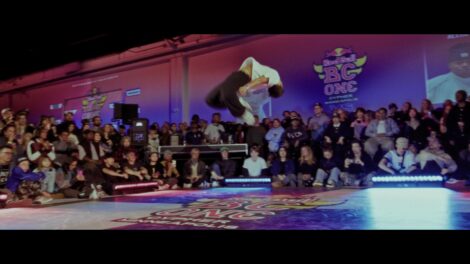
Break dancers are shown in this scene in Austin Ambuguyen's "Concrete & Salt." Courtesy photo
Having worked on several local productions, including "Moku Moku," he is currently directing his first feature-length indie documentary chronicling three young breakdancers as they train on their journey to the Red Bull BC ONE Championship in Canada.
"The short film is like a preview to the full feature film," he said. "It talks about the whole competition and the values that these guys have in the Hawaii hip-hop community."
Ambuguyen became enamored with filmmaking while a student at Maui High. "I owe a lot of what I know through Maui High School," he said. "We had a great media program there and a great teacher, Mr. Clint Gima. He's the one that inspired me to get into documentary filmmaking."
Yamashita felt inspired to tell the explore the history of Lahaina's Hui O Waʻa Kaulua and the Moʻolele ocean voyaging canoe, which was destroyed in the 2023 fire.
"I went on a sail with them, and talking with Timi (Gilliom) and Kala (Tanaka), I realized Hui O Waʻa Kaulua is an amazing story," said Yamashita, who was speaking while fishing off Molokai. "Hui O Waʻa Kaulua was born out of the community of the people of West Maui. There's so much history to it. Moʻolele was on the water before Hōkūleʻa was even launched. No one really knows that story."
He hopes his film brings "awareness that there is this amazing group with all of this history from a very important time in Hawaii when a lot of awakening was happening. A lot of times those stories are associated with movements that happened on other islands, and I hope people realize Maui was just as much a part of everything that was going on as anyone else."
Yamashita also felt it was important to tell their story because their organization and their canoes were so heavily impacted by the Lahaina fires.
"The fact that they were able to bounce back through all of that and become more focused and stronger than ever, they really deserved acknowledgement for that resilience," Yamashita said.
Along with the Hawaii and Student Films categories, the festival will show an array of Indigenous Voices films.
"The indigenous films that we've received are astounding," said Kohne.
Festival marketing and communications director Amber Bobin recently returned from New Zealand where she visited the Māoriland Film Festival in Ōtaki, where 130 nations were represented with 111 films.
"I went to observe it as an opportunity to learn how they've become so successful, but also an opportunity to meet other indigenous filmmakers," said Bobin. "We've had over a dozen submissions, and we're excited about the opportunity of bridging this gap between what has been a successful model from cultural values built into the film industry in New Zealand and making sure that those in Hawaii understand that we can also have this as we evolve and grow."
One of the films that will screen in June, "Grace," stars Kula-born Native Hawaiian actor, director, and writer Lindsay Watson ("Finding 'Ohana," "Moana 2"). It won Best Indigenous Nations Film at New Zealand's South Pacific Film Festival.