
Coconut rhinoceros beetles found on Maui, Molokai
Trending
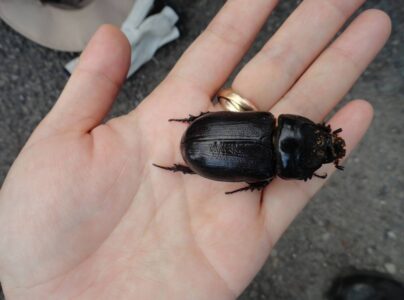
State officials are asking the public on Maui and Molokai to report any signs of the coconut rhinoceros beetle after the invasive species was recently found in traps on both islands.
Adding to concerns, a second beetle was discovered Wednesday on Molokai.
State Department of Agriculture Deputy Dean M. Matsukawa said officials haven't yet confirmed if the second pest is a coconut rhinoceros beetle, but added that about 250 traps were being sent to Maui County for distribution.
"We're setting up more traps," he said.
The coconut rhinoceros beetle is an invasive species that bores into the crown of palms, threatening plants and crops vital to Hawaii's ecosystem, including taro, lauhala, sugarcane, breadfruit and bananas. Matsukawa said if given a choice, the beetles usually go for coconut trees first.
The beetle has established itself on Oahu, where the infestation triggered a ban on shipping compost off the island in October 2024.
According to state officials, one beetle was discovered in a trap on April 6 at Kahului Airport.
Matsukawa said a beetle was detected a day later at Kaunakakai Harbor on Molokai, and another beetle was found April 8 on Molokai.
He said the detection of the beetles has focused on areas at airports and harbors because there is a greater likelihood they will arrive via these entry points. State inspectors check compost heaps as well as cargo containers.
The coconut rhinoceros beetle is common across Southeast Asia, where its population is kept in check by a number of predators, as well as a fungus and virus, according to the Oahu Invasive Species Committee.
The coconut rhinoceros beetle was accidentally introduced from Sri Lanka to Samoa in 1909 and is now distributed throughout the Pacific. It was first found on Oahu in 2013, according to the state.
More than 3,100 traps have been deployed around Oahu, according to the state.
Department of Agriculture Pest Control Branch manager Han Lau said upon receiving a report of a coconut rhinoceros beetle, inspectors take immediate action.
"We try to set up more traps, identify breeding grounds and do an assessment of damage," Lau said.
He said the Maui Invasive Species Committee is helping to set up the traps.
Lau said on the Big Island, state and county officials are trying to restrict the movement of compost and green waste, which serve as breeding grounds for the beetle.
On June 27, Big Island Mayor Kimo Alameda, in coordination with state agricultural officials, issued a 90-day stop movement order in areas of West Hawaii.
State officials ask the public to report findings or visible coconut rhinoceros beetle damage to the Hawaii Department of Agriculture at 808-643-PEST (7378).