
Cesspool fix could be costly
Least expensive system could cost homeowners about $21,000, report says
Trending
KAHULUI -- Average Upcountry homeowners looking to replace their cesspools could fork out around $21,000 for the least expensive conversion system, or even around $31,000 for a system to eliminate most of the nitrates that can impact drinking water, according to a recent draft report that examines cesspool upgrade alternatives for Upcountry residents.
A state law passed in 2017 requires residents to replace cesspools with a septic tank or to hook up to a sewer system by 2050. Upcountry, which could have up to 8,900 cesspools, has been identified along with Kahaluu on Oahu as the top of 14 priority areas in the state for cesspool upgrades, according to a state Department of Health report.
A Health Department water quality investigation of Upcountry found two wells with elevated nitrate levels -- at Baldwin Ranch Estates, with up to 8.9 milligrams per liter, and the Pukalani Golf Course, with levels up to 6.8 milligrams per liter. Nitrates are found in fertilizer and sewage.
The legal limit for nitrate levels is 10 milligrams per liter, but the normal concentration of nitrates in Hawaii aquifers is less than 3 milligrams per liter. Health officials said the wells with above-normal levels of nitrates were in areas with a lot of cesspools. Officials have emphasized that the water is safe to drink, though it can be fatal for infants if levels exceed 12 milligrams per liter.
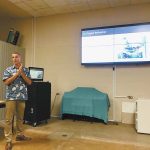
So far, Upcountry residents have been up in arms, worried about the costs and the impacts. They have questioned the studies and have criticized the state in singling out Upcountry and residents who may not be tied to the wells with high levels of nitrates. Residents also expressed similar frustrations at a meeting on the report in Kahului on Wednesday at the University of Hawaii Maui College campus. Another meeting was held Wednesday night at the Kula Community Center.
The draft report said the total cost of cesspool replacement could range from $120 million to more than $500 million for Upcountry. There would also be ongoing operation and maintenance costs.
The draft final report is titled "Investigation of Cesspool Upgrade Alternatives in Upcountry Maui," which was contracted to local researchers by the state Department of Health's Safe Drinking Water Branch.
The complicated draft report identifies cesspool replacement options, develops a range of management alternatives that incorporate feasibility, analyzes environmental benefits of each alternative and enumerates costs of the alternatives.
Alternatives include septic tanks hooking up to various systems such as an absorption system or seepage pit. Other alternatives include aerobic treatment units with various systems, installation of sewer systems or decentralized treatment units.
A researcher on the project, Roger Babcock Jr., acknowledged that there are many alternatives and that with the study "it adds information to the discussion" on the cesspool ban.
The information can be used by residents and government leaders to examine costs and benefits and if the ban should proceed, Babcock acknowledged.
Researchers will continue to receive public input on the draft report until July 31, said Babcock, a professor at the University of Hawaii at Manoa's Department of Civil and Environmental Engineering Water Resources Research Center.
The final report is scheduled for Sept. 30.
Babcock said that the final report will include some recommendations.
The draft can be found at olesonlab.org/upcountry-maui-cesspool-project/.
According to the report, someone with a three-bedroom home could install a septic tank accompanied by an absorption disposal system for around $21,050, one of the more lower-priced options for personal cesspool conversion.
If residents wanted to have a 100 percent reduction in nitrates, they could choose to install an aerobic treatment unit along with an evapotranspiration system, which Babcock said evaporates all the treated water so that none leaches into the underlying soil or groundwater.
This would cost around $31,000 for a three-bedroom home.
With all alternatives there are different pros and cons. For example, the lower-priced septic tank and absorption disposal system would only result in a 47 percent reduction in nitrates.
But the system that would result in 100 percent reduction in nitrates requires high maintenance.
The study also notes lifetime costs for various systems, which could go over $80,000 for a system lasting 60 years or longer.
Even as options were presented for individual homeowners, Babcock acknowledged that some residents could instead have sewer systems installed with the assistance of private and or government entities.
* Melissa Tanji can be reached at mtanji@mauinews.com.